Cancer cell therapy has reached the "everyone gets a solo" part of the concert, which is thrilling unless you're the tumor and suddenly the macrophage has brought a trumpet.
That is the basic groove of Zi and colleagues' 2026 review in Signal Transduction and Targeted Therapy: cancer treatment is no longer just about blasting tumors with chemo, cutting them out, or asking antibodies to politely point at the bad guys. Researchers are increasingly treating immune cells like tiny programmable musicians. Take a cell, tune it, hand it a better instrument, and send it back into the body to riff against cancer.
The headline act is still CAR-T therapy, where a patient's T cells get engineered with a chimeric antigen receptor, or CAR, that helps them recognize cancer cells. Think of it as giving the immune system a fake ID scanner, except the bouncer is microscopic and occasionally causes a cytokine mosh pit. CAR-T has already done real work in blood cancers, especially leukemias, lymphomas, and multiple myeloma. The National Cancer Institute notes that FDA-approved CAR-T therapies have produced durable remissions in some patients with advanced blood cancers.
The Old Standard Got a Bigger Band
Zi et al. are not reporting one new clinical trial. This is a map of the whole noisy, ambitious scene: CAR-T cells, TCR-T cells, tumor-infiltrating lymphocytes, gamma delta T cells, CAR-NK cells, CAR-macrophages, dendritic cells, B cells, and stem-cell-based approaches. If you tried to diagram it in mapb2.io, you'd need a large canvas and probably a snack.
The shift matters because CAR-T has a classic jazz problem: it sounds great in one room and gets weird in another. Blood cancers are relatively reachable. Tumors in the blood and bone marrow are like targets on an open stage. Solid tumors, by contrast, are smoky basement clubs with bad acoustics, locked doors, and a bouncer named Tumor Microenvironment.
Solid tumors hide behind physical barriers, uneven antigen expression, low oxygen, suppressive immune signals, and metabolic clutter. A CAR-T cell may know the tune, but the room is fighting the groove.
TILs, NK Cells, and Other Improvisers
Tumor-infiltrating lymphocyte therapy, or TIL therapy, takes immune cells already inside a tumor, expands them outside the body, then sends them back in larger numbers. It is less "new instrument" and more "turn up the volume on the players who already found the stage." That approach crossed a major line in 2024, when the FDA granted accelerated approval to lifileucel for advanced melanoma, the first cellular therapy approved for a solid tumor.
CAR-NK cells bring a different flavor. Natural killer cells already patrol for abnormal cells, and engineering them with CARs may create a therapy that is more "off-the-shelf" than patient-custom-built CAR-T. That could mean faster treatment, lower manufacturing cost, and less risk of graft-versus-host disease. The catch, because biology never lets anyone leave early, is persistence. NK cells may be safer, but they can also fade before the final chorus.
CAR-macrophages are another intriguing section of the band. Macrophages naturally crawl into tumor tissue, which makes them tempting delivery vehicles and tumor-eating machines. But macrophages can also be persuaded by tumors to become accomplices. The therapy challenge is turning them into cleanup crew, not corrupt venue security.
The Manufacturing Blues
A major theme in the review is logistics. Today's autologous cell therapies often require collecting cells from one patient, engineering them, expanding them, quality-checking them, shipping them back, and hoping the cancer does not spend that time acting like it owns the lease.
That is why researchers want allogeneic "off-the-shelf" cells and in vivo engineering, where genetic instructions are delivered directly into the body. A 2025 Science paper showed targeted lipid nanoparticles could generate CAR-T-like cells in vivo in preclinical systems. If that line of work translates to people, the therapy could become less like commissioning a custom saxophone and more like handing the band sheet music on stage.
Where AI Sneaks Into the Set
The AI angle here is not robots diagnosing cancer from across the room while wearing sunglasses. It is more useful and less cinematic. Multiomics data - genomics, transcriptomics, proteomics, immune profiling - can help researchers find better targets, predict toxicity, and match therapies to patients. Machine learning may help spot which antigen combination gives tumor cells fewer escape routes. Basically, AI becomes the arranger, listening across too many tracks for any human to mix cleanly.
But nobody should oversell it. Bad data can make AI confidently wrong, like a GPS that sends your CAR-T cell into a lake. The review is careful: better targeting, toxicity control, scalable production, and stronger clinical validation all still have to happen.
The Takeaway Groove
Zi and colleagues describe a field moving from a star soloist to an ensemble. CAR-T proved engineered cells can change outcomes for some cancers. The next act is making cell therapy work in harder tumors, reach more patients, cost less, and cause fewer dangerous side effects such as cytokine release syndrome, neurotoxicity, or off-tumor attacks.
If the field gets the harmony right, future cancer therapy may look less like one magic bullet and more like a coordinated band: T cells on melody, NK cells keeping rhythm, macrophages pushing through the crowd, dendritic cells cueing the immune system, and AI quietly adjusting the score from the back booth.
Cancer will not politely stop mutating because the science got elegant. But the band is getting larger, sharper, and harder to ignore.
References
- Zi G. et al. "Advances and prospects in cell therapy for cancer: explorations from T cells to stem cells." Signal Transduction and Targeted Therapy 11, 255 (2026). DOI: 10.1038/s41392-026-02780-8
- Uslu U., Castelli S., June C.H. "CAR T cell combination therapies to treat cancer." Cancer Cell 42(8), 1319-1325 (2024). DOI: 10.1016/j.ccell.2024.07.002
- Klobuch S. et al. "Tumour-infiltrating lymphocyte therapy for patients with advanced-stage melanoma." Nature Reviews Clinical Oncology 21, 173-184 (2024). DOI: 10.1038/s41571-023-00848-w
- Hunter T.L. et al. "In vivo CAR T cell generation to treat cancer and autoimmune disease." Science (2025). DOI: 10.1126/science.ads8473
- FDA. "FDA grants accelerated approval to lifileucel for unresectable or metastatic melanoma" (February 16, 2024). FDA link
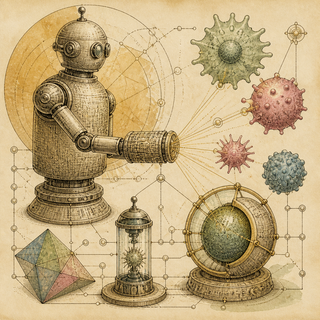
Disclaimer: This blog post is a simplified summary of published research for educational purposes. The accompanying illustration is artistic and does not depict actual model architectures, data, or experimental results. Always refer to the original paper for technical details.