This is a paper about keeping your literature review from turning into an expensive, citation-shaped junk drawer. It sounds plain because it is plain, right up until you realize that a modern review is not just "read papers, write summary." It is a whole data pipeline, and if that pipeline is messy, your final conclusions can come out messy too.
Gerit Wagner, Julian Prester, Roman Lukyanenko, and Guy Paré argue that literature reviews need better data management rules, especially now that research volume keeps swelling and AI tools are happily volunteering to "help" with search, screening, and extraction [1]. So here is the thing: if you feed sloppy metadata, half-checked PDFs, and inconsistent coding decisions into an AI-assisted workflow, you do not get wisdom. You get faster chaos.
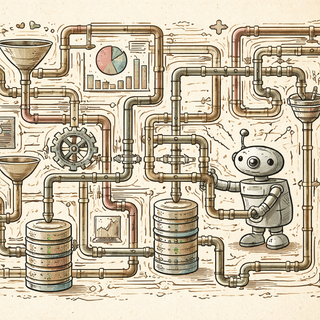
The review is not the paper pile - it is the plumbing
Most people picture a literature review as a stack of papers and one increasingly dehydrated researcher. Fair enough. But the paper says the real action is in the data sitting behind that stack: metadata, PDFs, screening decisions, extraction tables, notes, synthesis matrices, version history, and all the little judgment calls nobody remembers three weeks later [1].
Let me unpack that. If a review team searches five databases, exports records in different formats, removes duplicates, screens titles, changes inclusion criteria slightly, re-runs the search, and then asks an LLM to extract outcomes from full texts, they are already managing a surprisingly complicated information system. That system has inputs, transformations, failure points, and the occasional gremlin wearing a CSV as a hat.
Wagner and colleagues call their answer the C5-DM Framework:
- Conceptualization - define what counts as data in the review
- Collection - gather records and full texts in a structured way
- Curation - clean, organize, store, and maintain those materials
- Control - track provenance, permissions, versioning, and auditability
- Consumption - actually use and reuse the data for synthesis, updating, and future reviews [1]
That sounds managerial, but it is really a survival guide.
Why this suddenly matters a lot more
This is where it gets interesting. The paper is not just complaining that spreadsheets are ugly. It is pointing at a bigger shift: literature reviews are being pushed into semi-automated and AI-assisted workflows, while the underlying data infrastructure still looks like it was assembled during a long layover.
Recent reviews show an expanding ecosystem of AI tools for evidence synthesis, including platforms for screening, extraction, and workflow support [2]. Another 2026 review on automated meta-analysis says the field is moving fast, but full automation is still more aspiration than settled reality, largely because trust, reproducibility, and transparent data handling remain stubborn problems [3].
And the C5-DM paper puts its finger on a particularly annoying issue: metadata is not one clean, eternal truth. A DOI record can change over time. Publisher pages, PDFs, Crossref-style metadata, and search engines may disagree. Semantic Scholar and similar systems can contain incomplete or inaccurate records, and if downstream LLM tools depend on those records, the mistakes can spread like office gossip with a GPU budget [1].
That is not hypothetical hand-wringing. A 2023 study on reproducible searches found that many published review searches were not meaningfully repeatable, with a very high share becoming irreproducible once settings and execution details were considered [6]. In other words, before the robot even enters the room, the humans have already hidden the instruction manual.
AI can help, but it needs clean shelves
The fun part of this story is that the authors are not anti-AI. Quite the opposite. Their point is that better data management is what makes computational methods genuinely useful instead of merely flashy.
That lines up with recent experiments. A 2024 feasibility study explored GPT-4 for data extraction in systematic reviews and argued that evaluation design matters just as much as model capability [5]. A 2025 preliminary benchmark found GPT-4 stronger than Claude-3 and Mistral 8x7B on several systematic review tasks, especially extraction [7]. A 2026 paper in Research Synthesis Methods pushed further with GPT-4o and o3 for review data extraction [4].
But none of those papers say, "Relax, the model has it from here." The pattern is basically this: LLMs can be useful interns, but they are still interns. Very fast interns, very confident interns, occasionally brilliant interns, occasionally the kind who label the wrong column and then stare at you with perfect confidence.
That is why this framework matters beyond academia. Anyone building tools for document analysis, review workflows, or evidence synthesis should care about provenance, versioning, and clean inputs. If you have ever wanted a saner way to handle PDFs before extraction and annotation, that is exactly the kind of workflow pressure that makes browser-based tools like pdfb2.io feel practical rather than decorative.
The actual takeaway
The paper's strongest idea is also its least glamorous one: literature reviews are data products. Treat them that way.
If that mindset sticks, review teams can make fewer silent errors, collaborate more transparently, reuse datasets more effectively, and give AI tools better raw material to work with [1]. If it does not stick, we will keep pretending the review is just prose, while the real method lives in a fog of exports, copied cells, renamed PDFs, and vibes.
And to be fair, "vibes-driven metadata governance" does sound like a startup pitch. It is just not a great research method.
References
[1] Wagner G, Prester J, Lukyanenko R, Paré G. Data management in literature reviews: The C5-DM Framework. Research Synthesis Methods. 2026. DOI: https://doi.org/10.1017/rsm.2026.10091. PubMed: https://pubmed.ncbi.nlm.nih.gov/41992722/
[2] Sousa MSA, Peiris S, Figueiró MF, et al. The landscape of artificial intelligence tools and platforms for evidence synthesis: a scoping review. Systematic Reviews. 2026;15:82. DOI: https://doi.org/10.1186/s13643-025-02842-y
[3] Li L, Mathrani A, Susnjak T. Transforming evidence synthesis: A systematic review of the evolution of automated meta-analysis in the age of AI. Research Synthesis Methods. Published online January 9, 2026. DOI: https://doi.org/10.1017/rsm.2025.10065
[4] Kataoka Y, Takayama T, Yoshimura K, et al. Automating the data extraction process for systematic reviews using GPT-4o and o3. Research Synthesis Methods. 2026. DOI: https://doi.org/10.1017/rsm.2025.10030
[5] Bjelajac D, Marshall IJ, Soboczenski F, et al. Exploring the use of a Large Language Model for data extraction in systematic reviews: a rapid feasibility study. arXiv. 2024. arXiv:2405.14445. https://arxiv.org/abs/2405.14445
[6] Li Z, Rainer A. Reproducible searches in systematic reviews: an evaluation and guidelines. IEEE Access. 2023;11:84048-84060. DOI: https://doi.org/10.1109/ACCESS.2023.3299211
[7] Large language models streamline automated systematic review: A preliminary study. arXiv. 2025. arXiv:2502.15702. https://arxiv.org/abs/2502.15702
Disclaimer: This blog post is a simplified summary of published research for educational purposes. The accompanying illustration is artistic and does not depict actual model architectures, data, or experimental results. Always refer to the original paper for technical details.