The rheumatology clinic at 8:30 AM looks like a waiting room for a very specific kind of lottery - one where patients starting a new biologic drug are silently wondering: will this one actually work for me?
A team of 23 researchers across 11 countries just built a machine learning model to answer that question. And the punchline? The fancy algorithm barely outperformed the statistical equivalent of a calculator watch.
The $64,000 Joint Question
Rheumatoid arthritis is the body's immune system picking a fight with its own joints - and losing badly. Around 30-40% of patients don't respond adequately to their first treatment (Engel et al., 2024), which means doctors are essentially playing an expensive, painful game of trial-and-error with TNF inhibitors, JAK inhibitors, IL-6 blockers, and other drugs whose names sound like rejected Star Wars characters.
The JAK-pot collaboration (yes, that's the real name, and yes, it's a pun - researchers contain multitudes) pooled data from 20 international registries to see if machine learning could predict which patients would hit remission. Remission here means a Clinical Disease Activity Index score of 2.8 or below - basically, your joints calming down enough that you can open a jar of pickles without crying.
Throwing 21,675 Treatment Courses at an Algorithm
The team fed an XGBoost model - think of it as a decision tree that went to grad school and learned to work in committees - 63 baseline variables from nearly 22,000 treatment courses. Patient demographics, joint counts, previous medications, disability scores, the works.
The result? An AUC of 0.797 on external validation. For the non-statisticians: imagine a model that, when shown one patient who achieved remission and one who didn't, correctly identifies which is which about 80% of the time. Decent, but not exactly the crystal ball rheumatologists were hoping for.
Here's where it gets interesting. The sensitivity was 0.804 (it caught most of the patients who did achieve remission), but the positive predictive value was only 0.454. Translation: when the model said "this patient will achieve remission," it was wrong more than half the time. However, the negative predictive value hit 0.902 - meaning when it said "nope, not gonna happen," it was right about 90% of the time.
This model is essentially the friend who's bad at picking restaurants but excellent at vetoing the terrible ones.
The Plot Twist Nobody Saw Coming (Except Statisticians)
The researchers then did something beautifully honest: they stripped their 63-variable XGBoost model down to just 10 predictors. The simplified model's AUC? 0.802. Better than the full model.
Then they ran plain old logistic regression - the statistical method your professor taught in week three of intro stats - on those same 10 variables. AUC: 0.809. The method invented before computers existed slightly outperformed the cutting-edge ML approach.
The top predictors were patient global assessment (basically asking "how do you feel?"), tender joint count, previous biologic exposure, and the Health Assessment Questionnaire disability index. In other words, the best predictors of whether treatment will work are... how sick you are right now and what you've already tried. The algorithm spent weeks crunching numbers to arrive at what your rheumatologist's gut instinct probably already knew.
Why This Matters More Than It Seems
Before you dismiss this as a "machine learning doesn't work" story, consider what it actually reveals. A 2024 systematic review of 29 ML studies in RA treatment prediction found most had unclear or high risk of bias, with guideline adherence averaging below 50%. This study did it right - massive multicenter dataset, proper external validation, honest reporting of limitations.
The real finding isn't that ML failed. It's that the data isn't rich enough yet. When routine clinical variables plateau at ~0.80 AUC regardless of model complexity, the bottleneck isn't the algorithm - it's the inputs. Genomic data, synovial biomarkers, imaging features, maybe even gut microbiome profiles could be the missing ingredients. A 2025 study on the RAID score in early RA found a similar ceiling effect, where a single patient-reported outcome performed nearly as well as complex multi-feature models.
Other groups are pushing boundaries: Lee et al. (2025) achieved AUCs of 0.82-0.88 for JAK inhibitor response prediction, while Salehi et al. (2025) reported 85.7% accuracy with risk stratification using AdaBoost. The field is converging on a truth: we need better features, not better models.
The Honest Takeaway
This paper is a masterclass in scientific humility. The authors built the most complex model they could, then systematically proved it wasn't necessary. They showed their tool works best as a "rule-out" instrument - helping clinicians identify patients unlikely to achieve remission so they can consider more aggressive or alternative strategies earlier.
If you're into visualizing how complex models make decisions - like understanding SHAP value plots that show which features push predictions up or down - tools like mapb2.io can help map out those decision pathways in a way that doesn't require a PhD to interpret.
The next frontier isn't building a bigger XGBoost. It's collecting richer data. Until then, the 8:30 AM lottery continues - but at least now we have a better way to identify the losing tickets.
References
-
Salis Z, Mongin D, Choquette D, et al. Machine Learning to Predict Remission Between Six and 24 Months in Rheumatoid Arthritis: Insights from the JAK-pot Collaboration. Arthritis & Rheumatology. 2026. DOI: 10.1002/art.70165. PMID: 41940462.
-
Salehi F, Salin E, Smarr B, et al. A robust machine learning approach to predicting remission and stratifying risk in rheumatoid arthritis patients treated with bDMARDs. Scientific Reports. 2025. DOI: 10.1038/s41598-025-09975-z.
-
Mendoza-Pinto C, Sanchez-Tecuatl M, et al. Machine learning in the prediction of treatment response in rheumatoid arthritis: A systematic review. Seminars in Arthritis and Rheumatism. 2024. DOI: 10.1016/j.semarthrit.2024.152501.
-
Li G, Kolan SS, Grimolizzi F, et al. Development of machine learning models for predicting non-remission in early RA highlights the robust predictive importance of the RAID score. Frontiers in Medicine. 2025. DOI: 10.3389/fmed.2025.1526708.
-
Lee YJ, Choi G, Yeo J, et al. Machine learning-based prediction of response to Janus kinase inhibitors in patients with rheumatoid arthritis using clinical data. Frontiers in Immunology. 2025. DOI: 10.3389/fimmu.2025.1689144.
-
Salehi F, Lopera Gonzalez LI, Bayat S, et al. Machine Learning Prediction of Treatment Response to Biological Disease-Modifying Antirheumatic Drugs in Rheumatoid Arthritis. Journal of Clinical Medicine. 2024;13(13):3890. DOI: 10.3390/jcm13133890.
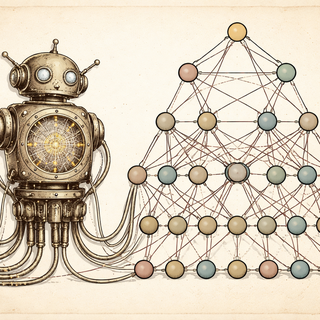
Disclaimer: This blog post is a simplified summary of published research for educational purposes. The accompanying illustration is artistic and does not depict actual model architectures, data, or experimental results. Always refer to the original paper for technical details.