The Gut-Liver Axis: More Than Just a Rumor
The Study: A Microbial Reality Show
The researchers rounded up 1168 volunteers - some healthy, some with various stages of liver disease - and took a peek at their gut microbiomes using 16S rRNA sequencing. They also did a deep dive into a subset of these samples with shotgun metagenomics, which is just a fancy way of saying they got really detailed data.
But wait, there's more! To amp up the findings, they threw in data from 2376 publicly available metagenomic datasets. Talk about crowdsourcing! With this treasure trove of data, they used machine learning to identify microbial biomarkers and classify the stages of liver disease.
What They Found: The Good, the Bad, and the Ugly
Turns out, as liver disease progresses, your gut microbiome diversity declines faster than a meme's popularity. It's like your gut bacteria are in a constant state of panic - especially during hepatitis, which, fun fact, lacks the typical taxonomic markers but showcases a serious uptick in biosynthetic activities. It's as if your gut's going, "We're not okay, but let's act like it."
Advanced stages like cirrhosis and hepatocellular carcinoma, however, have their own consistent microbial markers, almost like a calling card. These findings could pave the way for non-invasive diagnostics in the future. Imagine diagnosing liver disease without needing a biopsy - just a gut check!
The Real-World Impact
Should these findings hold up in further studies, we might see a world where diagnosing liver diseases becomes as simple as a stool test. No more invasive procedures, just a quick microbial headcount. And for those with liver conditions, this could mean earlier detection and potentially better outcomes.
Plus, understanding these microbial signatures might open up new avenues for treatment. Could tweaking your microbiome become part of the liver disease management toolkit? Time will tell, but it's certainly a promising direction.
Challenges and the Road Ahead
Despite these exciting findings, there's still a bit of a learning curve. Microbiome studies are notoriously complex, kind of like trying to understand why cats do that weird sideways hop. There's a lot we still don't know, and integrating these microbial insights into clinical practice will require more research.
Wrapping It Up
So, the next time you're pondering the mysteries of the universe - or just wondering what's for dinner - consider the tiny bacterial roommates in your gut. They're doing a lot more than just hanging out; they're playing a critical role in your health, especially when it comes to liver diseases. And who knows, they might just be the key to unlocking new, less invasive diagnostics in the future.
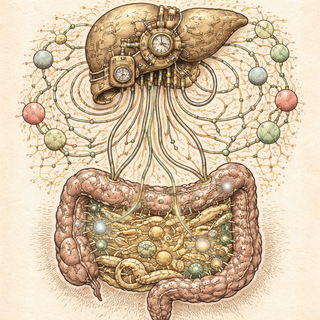
Disclaimer: This blog post is a simplified summary of published research for educational purposes. The accompanying illustration is artistic and does not depict actual model architectures, data, or experimental results. Always refer to the original paper for technical details.
References:
- Jorge F Vázquez-Castellanos et al., "Stage-dependent gut microbiome and functional signatures across the liver disease spectrum: an integrative multicohort study." Gut (2025). DOI: 10.1136/gutjnl-2025-337436
```