Cancer AI arrives wearing a tiny crown roughly once a week, usually promising to change medicine before lunch. Most of it deserves a polite nod and a locked filing cabinet. But CANVAS, the new platform from Li and colleagues in Cell, earns a longer look because it tackles a painfully practical problem: doctors already have mountains of ordinary H&E pathology slides, while the fancy spatial proteomics gear that maps tumor ecosystems is expensive, specialized, and not exactly sitting next to the office coffee machine.
Here we observe the tumor in its natural habitat. It is not a lone villain cell twirling a microscopic mustache. It is more like a hostile city: cancer cells, immune cells, fibroblasts, blood vessels, and extracellular scaffolding all jostling for territory. Some districts invite immune attack. Others seem to hang a tiny "no cops" sign and keep growing.
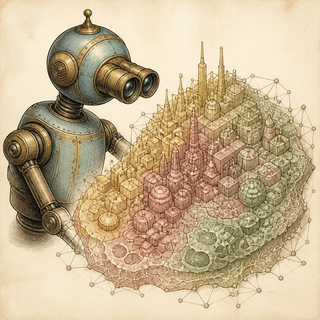
CANVAS asks a simple but ambitious question: can an AI look at a standard pink-and-purple H&E slide and infer the hidden spatial neighborhoods that expensive molecular imaging would normally reveal?
The Tumor Has Zoning Laws
The paper, titled "Cellular architecture and neighborhood-informed virtual spatial tumor profiling from histopathology," introduces CANVAS: cellular architecture and neighborhood-informed virtual AI-driven spatial profiling. Yes, the acronym has been fed well.
The researchers built their system using an atlas of more than 18 million cells from 457 patients with non-small cell lung cancer. Those cells were profiled with 41-plex spatial proteomics, meaning the team measured dozens of protein markers while preserving where cells were sitting in the tissue. That spatial part matters. A T cell next to a tumor cell is a very different beast from a T cell stranded across town, waving heroically from behind a fibroblast hedge.
From this atlas, CANVAS identified 10 reproducible cellular neighborhoods. Think of them as recurring ecological habitats inside tumors: immune-rich zones, tumor-dense zones, stromal barricades, and other micro-environments where cell types gather in patterns that seem to carry biological meaning.
Then came the trick. The team aligned these spatial proteomics maps with routine H&E histology and used foundation-model-based morphology encoding to teach CANVAS how visible tissue structure relates to those hidden neighborhoods. In nature-documentary terms: the model learns to infer the forest's food web from leaf shapes and footprints.
Why H&E Slides Are the Main Character
H&E staining is old, cheap, fast, and everywhere. Hematoxylin stains nuclei blue-purple; eosin stains cytoplasm and surrounding material pink. It is the pathologist's daily weather report. Not perfect, but astonishingly useful.
Spatial proteomics, by contrast, is the luxury drone survey. It can show which proteins are expressed by which cells and where, but it requires special assays, instruments, and expertise. That limits how often it can be used in clinical practice.
CANVAS tries to bridge that gap. Once trained, it predicts cellular-neighborhood "habitat structures" from ordinary H&E slides. The team then tested clinical usefulness in more than 5,000 patients across 9 cancer types, using the inferred neighborhoods for prognosis, spatial ecotype stratification, and immunotherapy outcome prediction.
That last part is the bit where the meerkat stands up. Immunotherapy can be extraordinary for some patients and disappointing for others. If spatial tumor habitats help predict who benefits, clinicians could make sharper treatment decisions instead of relying on blunt markers alone.
The AI Is Reading the Room, Literally
This work sits in a fast-moving family of "virtual spatial profiling" studies. A related Nature Medicine paper on HEX showed that AI could predict virtual spatial proteomics from H&E slides in lung cancer and improve prognosis and immunotherapy response prediction compared with standard markers. Another recent Nature Cancer perspective argues that cellular neighborhoods are becoming a useful unit for understanding tumor ecosystems, not just pretty maps for grant slides.
CANVAS pushes that idea toward scale. Instead of treating a slide as one giant bag of pixels, it asks where cell communities live and how those communities organize. This is less "does the tumor look scary?" and more "which neighborhoods are cooperating, hiding, starving, recruiting, or quietly plotting in the basement?"
Of course, the model is not magically seeing proteins. It is predicting spatial structure from learned correlations. That distinction matters. If staining protocols, scanners, populations, or treatment settings shift, the model may stumble like a penguin on hardwood. The paper reports broad validation, but real clinical deployment would still need prospective testing, calibration across hospitals, workflow integration, and proof that acting on these predictions actually helps patients.
Why This One Might Matter
If reproducible, CANVAS could make spatial biology less like a boutique expedition and more like a clinical layer added to slides hospitals already collect. That could help researchers study tumor ecology at population scale, not just in small expensive cohorts. It could also give oncologists more interpretable signals: not merely "high risk," but "this tumor contains neighborhood patterns linked to immune exclusion, recurrence, or therapy response."
The quiet beauty here is that CANVAS does not ask pathology to throw away its old tools. It watches the familiar H&E landscape and tries to infer the invisible social life of cells beneath it. Like any good nature narrator, it reminds us that behavior depends on habitat. Even cancer cells, those tiny freeloading survivalists, are shaped by where they live and who they loiter with.
References
-
Li Y, Li Z, Quinton R, et al. "Cellular architecture and neighborhood-informed virtual spatial tumor profiling from histopathology." Cell. 2026. DOI: 10.1016/j.cell.2026.05.031. PMID: 42302781
-
Xiang J, et al. "AI-enabled virtual spatial proteomics from histopathology for interpretable biomarker discovery in lung cancer." Nature Medicine. 2026. DOI: 10.1038/s41591-025-04060-4
-
Ma L, Xiong B, Liu M, et al. "Cellular neighborhoods in cancer." Nature Cancer. 2026. DOI: 10.1038/s43018-025-01107-w
-
Zheng Y, Carrillo-Perez F, Pizurica M, et al. "Spatial cellular architecture predicts prognosis in glioblastoma." Nature Communications. 2023. DOI: 10.1038/s41467-023-39933-0
-
Hao N, Yang X, Yan B, et al. "Histopathology-centered Computational Evolution of Spatial Omics: Integration, Mapping, and Foundation Models." arXiv: 2601.07826
Disclaimer: This blog post is a simplified summary of published research for educational purposes. The accompanying illustration is artistic and does not depict actual model architectures, data, or experimental results. Always refer to the original paper for technical details.