Breeders are tired of watching a soybean line look sturdy on paper, then fold like cheap scaffolding the minute drought, heat, salt, flooding, and disease all clock in for the same shift. That is the job-site headache behind “Decoding stress resilience in soybean” by Shahzad and colleagues: how do you build soybeans that can keep standing when climate change keeps changing the load conditions halfway through the pour? (DOI, PubMed)
Soybean is not some niche crop hiding in the back shed. It is one of the world’s main suppliers of protein and oil, which means when soybean yields wobble, food systems feel it. The paper is a review, not a fresh field trial, and that matters. The authors are not claiming they found the one magic bolt that fixes everything. They are laying out the blueprints: what soybean stress responses look like at the molecular level, which regulatory networks matter, and how genomics, phenotyping, and AI might help breeders move from “interesting gene” to “useful cultivar” a lot faster.
The foundation is gene regulation. A plant does not “handle drought” with one heroic gene strutting in slow motion. It uses a whole work crew of sensors, signaling pathways, transcription factors, hormones, and metabolic responses. In biology-speak, that is a gene regulatory network, basically the wiring diagram that decides which genes get switched on, when, and in which cells (Wikipedia: Gene regulatory network). If a soybean root senses water shortage, that signal has to travel through the system, trigger the right regulators, and change growth and metabolism before the whole structure starts cracking.
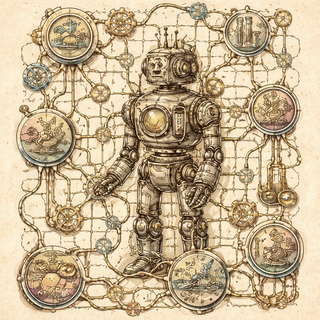
Load-Bearing Walls, Not Decorative Trim
What this review does well is insist that stress resilience is not one thing. Drought, salinity, heat, cold, nutrient shortages, waterlogging, and pathogens all hit different parts of the plant’s “building code,” but they also overlap. That overlap is where the job gets messy. A pathway that helps in one setting can backfire in another. Plants are basically doing emergency remodeling while still trying to make seeds.
Recent work backs up that complexity. A 2024 review in Current Opinion in Plant Biology argues that newer single-cell and spatial transcriptomics tools can map stress-response regulatory networks with much better resolution, down to which cell types are doing what under pressure (Jain, 2024). That is a big deal, because treating a whole plant like one uniform slab of concrete misses the fact that roots, leaf cells, and vascular tissues all have different jobs on site.
Meanwhile, practical drought studies keep showing that breeders need better trait selection, not more wishful thinking. In a 2024 Scientific Reports study, researchers screened 64 soybean genotypes and found that balanced root-to-shoot traits mattered for early vegetative drought tolerance (Narayana et al., 2024). Translation: if the underground plumbing and the above-ground frame are out of balance, the whole build suffers.
Where AI Walks Onto the Site
This is the part where people either get excited or start rolling their eyes hard enough to sprain something. Shahzad et al. are reasonably sober about it. AI is not replacing breeders. It is more like bringing in a very fast assistant superintendent who can sort through mountains of genotype, phenotype, and multiomics data without crying into a clipboard.
That matters because modern breeding has a data bottleneck. You can sequence genomes faster and cheaper than ever, but turning that data into reliable selection decisions is still a grind. Genomic selection tries to solve part of that by using markers across the whole genome to predict which plants are worth advancing, instead of betting everything on a few flashy genes (Wikipedia: Genomic selection). A 2024 Molecular Plant review argues that genomic selection keeps improving when it is paired with larger genotypic and phenotypic datasets, smarter training populations, and extra omics layers (Alemu et al., 2024).
Deep learning is also creeping into breeding, especially through imaging and phenotyping. A 2023 review in Frontiers in Plant Science describes how deep learning can help process huge volumes of crop images and other breeding data, though it also notes the obvious headache: data collection and integration still lag behind what the models need (Wang et al., 2023). In soybean specifically, a 2024 arXiv preprint showed that multi-sensor phenotyping could detect drought stress before obvious wilting, using UAVs and vegetation indices (Riera-Lizarazu et al., 2024). That is the agricultural equivalent of spotting a load-bearing crack before the wall starts leaning at a family dinner.
What Holds Up, and What Still Looks Shaky
The paper’s main strength is that it treats soybean resilience like a full construction project, not a single-room patch job. It connects regulatory biology, phenotyping, breeding, and AI into one build plan. That is the right frame.
The weak point is the same one the whole field has: prediction is not the same as delivery. A model can nominate promising genes or lines, but the field still gets the final inspection. Weather is unruly, stress combinations are ugly, and traits that behave nicely in controlled conditions can act like absolute cowboys in real farms. Also, this is a review, so its value depends on how well future breeding programs can turn the assembled evidence into cultivars people actually plant.
Still, the direction is solid. If breeders can combine better regulatory maps, better field phenotyping, and better prediction tools, soybean improvement stops being a series of educated guesses and starts looking more like building to spec.
References
-
Shahzad A, Sun M, Pei S, Liu X, Zhang Y, Xu K, Gao H, Zhou Y, Li H. Decoding stress resilience in soybean: Regulatory networks and precision breeding under climate change. Journal of Integrative Plant Biology. 2026. DOI: 10.1111/jipb.70248. PubMed: 42010761
-
Jain M. Gene regulatory networks in abiotic stress responses via single-cell sequencing and spatial technologies: Advances and opportunities. Current Opinion in Plant Biology. 2024;82:102662. DOI: 10.1016/j.pbi.2024.102662
-
Alemu A, Astrand J, Crossa J, et al. Genomic selection in plant breeding: Key factors shaping two decades of progress. Molecular Plant. 2024. DOI: 10.1016/j.molp.2024.03.007
-
Wang X, Zeng H, Lin L, Huang Y, Lin H, Que Y. Deep learning-empowered crop breeding: intelligent, efficient and promising. Frontiers in Plant Science. 2023;14:1260089. DOI: 10.3389/fpls.2023.1260089
-
Narayana NK, Wijewardana C, Alsajri FA, et al. Resilience of soybean genotypes to drought stress during the early vegetative stage. Scientific Reports. 2024;14:17365. DOI: 10.1038/s41598-024-67930-w
-
Riera-Lizarazu O, et al. Multi-Sensor and Multi-temporal High-Throughput Phenotyping for Monitoring and Early Detection of Water-Limiting Stress in Soybean. arXiv. 2024. arXiv: 2402.18751
Disclaimer: This blog post is a simplified summary of published research for educational purposes. The accompanying illustration is artistic and does not depict actual model architectures, data, or experimental results. Always refer to the original paper for technical details.