Tucked between your muscle fibers live cells that spend most of their existence doing absolutely nothing. They just... sit there. Waiting. Like that fire extinguisher you've never used. These are satellite cells, and until your muscle needs repair, they remain in biological hibernation mode. But here's what scientists are now discovering: as you age, these cellular slackers don't just get lazy - they get weird in very specific, trackable ways.
A new perspective piece in Cell Research traces how transcriptomic technologies - fancy tools for reading what genes a cell is actually using - have completely rewritten our understanding of why muscle stem cells fail as we get older. Spoiler: it's not just random decay. It's more like a hostile takeover by inflammatory genes and metabolic dysfunction.
From Blurry Averages to Crystal-Clear Portraits
Back in the early days (we're talking 2000s-era microarrays), researchers could only study muscle stem cells in bulk. Imagine trying to understand a city by averaging everyone's daily routine into one schedule. Sure, you'd learn that "people eat around noon," but you'd miss that Karen in accounting takes lunch at 10:30 AM while the night shift hasn't even woken up yet.
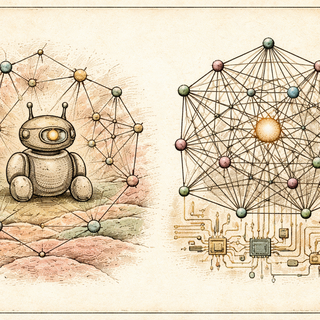
Bulk RNA sequencing gave us population-level snapshots: aged muscle stem cells showed dampened muscle-building programs, sluggish metabolism, and cranked-up inflammation and stress responses. Useful, but it obscured the real drama happening at the individual cell level.
Then came single-cell RNA sequencing - a technology that reads gene expression one cell at a time. Now researchers could finally see what each individual satellite cell was up to. And what they found was revelatory: aging isn't just random cellular decay. Aged muscle stem cell populations show reproducible changes in which cell states dominate, delayed progression through their normal muscle-building program, and certain subpopulations that are especially vulnerable to age-related dysfunction.
The Aging Muscle Atlas: 200,000 Cells and Counting
Recent work has been nothing short of ambitious. The Human Skeletal Muscle Aging Atlas catalogued approximately 200,000 single-cell transcriptomes from 17 donors across different ages. Another study built an integrated atlas of over 270,000 single-cell transcriptomes from mice at young, old, and geriatric ages, tracking muscle regeneration after injury.
What emerged from these massive datasets? First, certain muscle stem cell subsets show decreased ribosome biogenesis - basically, they're producing less of the machinery needed to make proteins. Second, some cells ramp up expression of inflammatory signals like CCL2, essentially broadcasting distress signals that may interfere with normal repair. Third, and perhaps most unsettling, aged muscles contain elevated numbers of "senescent-like" stem cell subsets within injury zones. These cells have essentially given up on dividing and are just hanging around, potentially causing trouble.
Location, Location, Location
The newest frontier is spatial transcriptomics - technology that reads gene expression while preserving information about where each cell actually sits within the tissue. Because context matters. A muscle stem cell's behavior depends heavily on its neighbors: the immune cells that show up after injury, the blood vessels that deliver nutrients, the connective tissue that provides structural support.
Researchers are now directly linking transcriptional states to niche organization and age-associated remodeling. The satellite cell "niche" - that cozy spot between the muscle fiber and its surrounding basement membrane - changes with age. The extracellular matrix gets stiffer. Immune cells infiltrate differently. Fat-forming cells start misbehaving. All of this shows up in the spatial data.
Machine Learning Enters the Chat
With datasets this large and complex, computational tools become essential. Trajectory inference algorithms can map out the paths cells take as they transition from quiescent stem cells to actively dividing progenitors to mature muscle cells. Machine learning approaches are being deployed to predict aging trajectories and, intriguingly, to identify candidate targets for rejuvenation.
The goal isn't purely academic. Understanding which molecular switches flip during muscle stem cell aging could point toward interventions. Right now, exercise remains the most effective strategy for maintaining muscle mass and function in aging. Studies show moderate treadmill running in aged mice can increase muscle stem cell numbers roughly 1.6-fold over eight weeks. But researchers are also exploring more exotic approaches: exosome-based therapies, stem cell secretome delivery, and targeted interventions to rejuvenate the stem cell niche.
Why This Matters Beyond the Lab
Sarcopenia - age-related muscle loss - affects quality of life for millions of older adults. It increases fall risk, reduces independence, and contributes to metabolic dysfunction. If we can understand precisely why muscle stem cells fail with age, we might develop targeted interventions that go beyond "lift weights and eat protein" (though you should definitely still do that).
The transcriptomic revolution has reframed how we think about muscle stem cell decline. It's not just stochastic damage accumulating randomly. It's a reproducible shift in cell state composition, with specific subpopulations failing in predictable ways. That predictability is actually good news - it means we might be able to do something about it.
Your satellite cells may be getting old, but at least now we're reading their mail.
References:
- Kim S, Pack SP, Rando TA. Transcriptomic advances in studies of muscle stem cell aging: From bulk to single-cell and beyond. Cell Research. 2026. DOI: 10.1038/s41422-026-01240-w
- Petrany MJ, et al. Transcriptomic analysis of skeletal muscle regeneration across mouse lifespan identifies altered stem cell states. Nature Aging. 2024. Link
- Human skeletal muscle aging atlas. Nature Aging. 2024. Link
- Feige P, Rudnicki MA. Control of satellite cell function in muscle regeneration and its disruption in ageing. Nature Reviews Molecular Cell Biology. 2021. Link
- Yan R, et al. Emerging Targets and Treatments for Sarcopenia: A Narrative Review. Nutrients. 2024. Link
- Single-cell RNA sequencing technologies and applications. PMC. 2022. Link
Disclaimer: This blog post is a simplified summary of published research for educational purposes. The accompanying illustration is artistic and does not depict actual model architectures, data, or experimental results. Always refer to the original paper for technical details.