Somewhere in Cambridge, UK, the medicine graveyard is getting a little less final. Ignota Labs, co-founded by drug-discovery scientist Layla Hosseini-Gerami, uses AI to ask a beautifully nosy question: why did this drug fail, exactly? Not “failed” in the vague corporate way, where everyone quietly updates LinkedIn. Failed how? Wrong target? Bad toxicity? Weird metabolism? A clinical trial face-plant with useful fingerprints still on the floor?
That is the story in Emma Ulker’s Nature spotlight, “How I use AI to turn failed drugs into new medicines.” It is an interview-style article rather than a standard research paper, but the idea sits right in the middle of one of AI’s most practical jobs in biomedicine: drug repurposing. Take something already invented, tested, or abandoned, and see whether it belongs somewhere else.
Basically, it is medical thrift shopping. Except the jacket costs $2 billion, has a 600-page safety dossier, and may or may not help with lupus.
The Medicine Bin Has Receipts
Drug discovery is famously brutal. You can spend years building a molecule, run it through preclinical testing and human trials, then watch it fail because biology decided to improvise jazz. But a failed drug is not always useless. Sometimes it hit the wrong patient group. Sometimes the dose was wrong. Sometimes the target biology was good, but the original disease was a terrible match.
Drug repurposing, also called drug repositioning, looks for new therapeutic uses for existing drugs. Classic examples include sildenafil, which wandered from cardiovascular research into erectile dysfunction and pulmonary hypertension, and thalidomide, which has a grim history but later found tightly controlled uses in leprosy complications and multiple myeloma.
The AI twist is scale. A human scientist can connect some dots. A machine-learning system can stare at drug structures, proteins, gene expression, side-effect reports, disease biology, electronic health records, and literature until the dots start forming a conspiracy board. Helpful? Potentially. Mildly alarming as a hobby? Also yes.
How the AI Plays Matchmaker
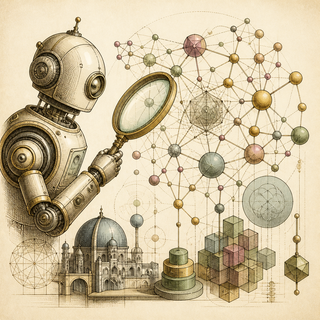
A lot of modern work uses knowledge graphs. Imagine a giant map where nodes are drugs, genes, proteins, diseases, symptoms, pathways, and side effects. The links say things like “targets,” “associated with,” “causes,” or “contraindicated for.” Graph neural networks then learn patterns across that messy web.
If a standard neural network is a spreadsheet gremlin, a graph neural network is the friend who notices that your ex, your landlord, and your dentist all somehow know the same bass player. Connections matter.
One standout example is TxGNN, a graph foundation model published in Nature Medicine in 2024. It was trained on a medical knowledge graph and ranked possible drug indications and contraindications for 17,080 diseases. The authors reported better performance than eight comparison methods in zero-shot settings, meaning the model tried to suggest candidates even for diseases with little or no existing treatment information. That matters because rare diseases often have painfully thin data and even thinner treatment options.
This is where Ignota Labs’ angle feels especially interesting. Instead of only asking “what drug might treat this disease?” the company asks “why did this candidate fail, and can we repair or redirect it?” That combines chemistry, biology, and machine learning in a way that treats failure as structured data rather than a bonfire.
The Catch, Because Biology Charges Hidden Fees
AI cannot magically bless a dud into a medicine. Models inherit the blind spots of their data. Medical knowledge graphs can be incomplete, biased toward well-studied diseases, or stale. Electronic health records are messy because humans write them, and humans will absolutely put “patient feels weird” into a multimillion-dollar data pipeline.
There is also the brutal difference between “the model ranks this drug highly” and “this drug helps actual patients without causing chaos.” Predictions still need lab validation, animal studies where appropriate, clinical trials, dosing work, safety monitoring, and regulatory review. The GPU may be the overworked intern doing the math, but it does not get to sign the prescription pad.
Still, the upside is real. If researchers can rescue even a fraction of abandoned compounds, they may save years of development time. Existing drugs and previously tested candidates often come with safety, pharmacology, and manufacturing knowledge. That does not make them easy wins, but it means scientists are not starting from an empty bench and a prayer candle.
And for rare or neglected diseases, speed is not just a business metric. It is the difference between “maybe someday” and “someone is finally looking.”
The Plot Twist Is Patience
The best version of AI drug repurposing is not a robot scientist yelling “Eureka!” while vapor rises from a beaker. It is quieter. More like a very caffeinated librarian cross-checking chemistry, disease pathways, clinical failures, and old trial records, then sliding a note across the table: “This one might deserve another look.”
That is why Ulker’s Nature article lands. The romance here is not that AI replaces drug discovery. The romance is that it might make the field less wasteful. Failed drugs are not just tombstones. Some are unfinished sentences.
And if machine learning can help scientists read those sentences properly, a few old medicines may get a second audition.
Speaking of tangled idea maps, tools like mapb2.io are handy for sketching how concepts connect. Drug repurposing is basically that, except the sticky notes are genes, molecules, diseases, and several billion dollars of “please work this time.”
References
-
Ulker, E. “How I use AI to turn failed drugs into new medicines.” Nature (2026). DOI: 10.1038/d41586-026-01626-1. PMID: 42270981.
-
Huang, K. et al. “A foundation model for clinician-centered drug repurposing.” Nature Medicine 30, 3601-3613 (2024). DOI: 10.1038/s41591-024-03233-x.
-
Wan, Z. et al. “Applications of Artificial Intelligence in Drug Repurposing.” Advanced Science 12, e2411325 (2025). DOI: 10.1002/advs.202411325. PMID: 40047357. PMCID: PMC11984889.
-
Kapetanovic, S. et al. “Artificial intelligence in drug repurposing for rare diseases.” Frontiers in Medicine (2024). DOI: 10.3389/fmed.2024.1404338. PMCID: PMC11150798.
-
“Drug repositioning.” Wikipedia. Accessed June 12, 2026. https://en.wikipedia.org/wiki/Drug_repositioning.
Disclaimer: This blog post is a simplified summary of published research for educational purposes. The accompanying illustration is artistic and does not depict actual model architectures, data, or experimental results. Always refer to the original paper for technical details.