The failure that kicked this whole research direction into high gear is almost insultingly mundane: you take antibiotics, your gut turns into a small civil war, you buy a probiotic with packaging that whispers "wellness" in an expensive font, and... nothing dramatic happens. The bugs you swallowed may survive the trip, wave politely, and fail to move in. Your resident microbiome, that chaotic HOA from hell, often refuses new tenants. Science looked at this mess and said, fine, maybe the problem is not "bacteria are useful," but "we keep sending the wrong bacteria to the wrong neighborhood."
That is the basic idea behind the new review by Kern, Tofield, Frame, and Elinav on next-generation probiotics, or NGPs [1]. The field is trying to move past first-generation probiotics, meaning the usual food-derived suspects, toward strains or microbial teams chosen for specific functions, better colonization, and actual therapeutic logic. Wild concept, I know.
Your gut is not a guest room
Traditional probiotics often get marketed like friendly reinforcements. In reality, your gut is less "please come in" and more "state your business." The microbiome has colonization resistance, which is the very useful habit of blocking outside microbes from settling in [2]. Great when it stops pathogens. Annoying when it also shrugs at the capsule you just paid $38 for.
That helps explain why probiotic effects can be inconsistent from person to person. The same strain can glide into one gut and bounce off another like a drunk guy failing the velvet rope test. A 2024 commentary in iMeta showed even short-term probiotic supplementation can alter the native microbiome's diversity, growth patterns, and genetic variation, which is a nice reminder that these systems are alive, complicated, and not reading your supplement label with the reverence marketing teams hoped for [3].
NGPs try to be more strategic. Instead of starting with microbes famous for fermenting dairy, researchers are looking at native human commensals and engineered strains that might do something specific: make useful metabolites, compete with harmful microbes, calm inflammation, or help nudge cancer therapy responses in the right direction [1,4].
Better bugs, worse logistics
Of course, the cool bacteria are often the divas.
Many NGP candidates are extremely oxygen-sensitive anaerobes, which means exposing them to air is a bit like asking a deep-sea fish to file taxes in Phoenix. In a 2023 Nature paper, researchers showed that Faecalibacterium prausnitzii, a much-discussed NGP candidate, could be developed for human use by exploiting microbial synergy and improving oxygen tolerance [5]. That matters because you cannot build tomorrow's microbial medicine if the star employee faints in manufacturing.
Then there is the bigger problem: even if a strain survives production and reaches the gut, it still needs to behave. The review highlights worries about in-host evolution, off-target effects, long-term safety, and the general inconvenience of proving that a live organism will keep doing the right thing after you release it into the biochemical rainforest of the intestine [1]. "Take two and call me in the morning" gets a lot less relaxing when the treatment can mutate.
Precision probiotics, now with extra math
This is where the computational side gets interesting. The review argues that AI and systems modeling could help choose strains, predict interactions, and design multi-microbe consortia tailored to a person's existing microbiome [1]. That is not sci-fi garnish. It is becoming necessary because the search space is absurdly large and the biology is annoyingly non-linear, which is a polite way of saying the gut loves making fools of simple theories.
A 2024 Nature Microbiology study used community-scale metabolic models to predict personalized short-chain fatty acid production and to simulate how diet, prebiotics, and probiotics might reshape it [6]. That is the sort of tool the field needs if it wants to stop guessing and start engineering. And if you tried to sketch those interaction networks on a bar napkin, you would quickly wish you had something like mapb2.io, because microbial ecology diagrams love turning into conspiracy boards.
There is also a broader clinical signal here. Microbiome therapeutics are no longer purely speculative. The FDA has already approved fecal microbiota products for preventing recurrent C. difficile infection, which is not the same thing as a probiotic, but it does show regulators will approve live microbiome-based interventions when the evidence is there [7]. That is the adult version of hope in this field: fewer vibes, more endpoints.
Why this actually matters
If NGPs work the way researchers hope, medicine gets a new class of therapies that are more like ecosystem repair than carpet bombing. Instead of tossing generic bacteria at every problem and praying for synergy, clinicians could eventually use strains or consortia selected for metabolic disease, inflammatory conditions, or even oncology support [1,4].
That is the promise. The catch is the same as always: the gut is complicated, human studies are hard, and "state-of-the-art" claims age about as gracefully as celebrity apologies. Still, this review makes a strong case that probiotics are growing up. Slowly. Messily. Under supervision. Which, frankly, is more than I can say for most wellness trends.
References
-
Kern L, Tofield A, Frame J, Elinav E. Next-generation probiotics: an outlook into current applications and future developments. Nature Reviews Microbiology. Published May 8, 2026. DOI: 10.1038/s41579-026-01311-0. PubMed: 42104000
-
Wikipedia contributors. Colonization resistance. Wikipedia. Accessed May 13, 2026. https://en.wikipedia.org/wiki/Colonization_resistance
-
Shen X, Jin H, Zhao F, Kwok LY, Zhao Z, Sun Z. Short-term probiotic supplementation affects the diversity, genetics, growth, and interactions of the native gut microbiome. iMeta. 2024;3:e253. DOI: 10.1002/imt2.253
-
Ratiner K, Ciocan D, Abdeen SK, et al. Utilization of the microbiome in personalized medicine. Nature Reviews Microbiology. 2024;22:291-308. DOI: 10.1038/s41579-023-00998-9
-
Khan MT, Dwibedi C, Sundh D, et al. Synergy and oxygen adaptation for development of next-generation probiotics. Nature. 2023;620:381-385. DOI: 10.1038/s41586-023-06378-w
-
Quinn-Bohmann N, Wilmanski T, Sarmiento KR, et al. Microbial community-scale metabolic modelling predicts personalized short-chain fatty acid production profiles in the human gut. Nature Microbiology. 2024;9:1700-1712. DOI: 10.1038/s41564-024-01728-4
-
U.S. Food and Drug Administration. Fecal Microbiota Products. Accessed May 13, 2026. https://www.fda.gov/vaccines-blood-biologics/fecal-microbiota-products
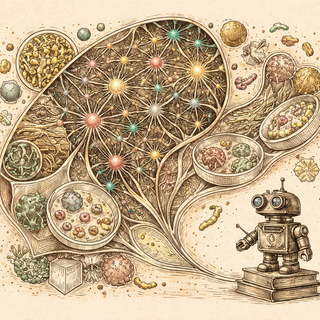
Disclaimer: This blog post is a simplified summary of published research for educational purposes. The accompanying illustration is artistic and does not depict actual model architectures, data, or experimental results. Always refer to the original paper for technical details.