The design choice that makes this paper click is almost embarrassingly sensible: do not cram a whole pathology slide into one giant model input and pray. Slice the slide into patches, let the model inspect the local evidence, then fuse those clues back into a slide-level verdict. It is the difference between reading a city map block by block versus trying to swallow the entire atlas and call that navigation.
The paper by Zhao and colleagues, published in npj Digital Medicine on April 18, 2026, tackles a nasty diagnostic problem in early pregnancy loss: telling apart complete hydatidiform mole, partial hydatidiform mole, hydropic abortion, and normal control on histology slides [1]. That matters because these categories are not bookkeeping trivia. A hydatidiform mole can change patient follow-up, trigger genetic testing, and affect monitoring for later trophoblastic disease [2,3].
The catch is that pathology here is messy. Under the microscope, some cases look like cousins who borrowed each other’s clothes. Traditional diagnosis often leans on morphology plus extra tests such as p57 immunostaining and sometimes molecular genotyping, which improves accuracy but adds cost and workflow friction [3,4]. In plain English: the gold standard works, but it is not exactly the cheap street hack.
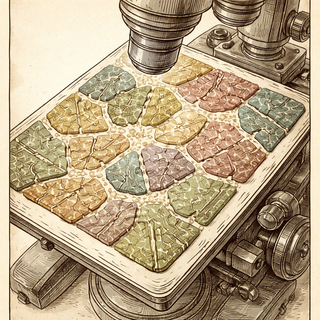
So the authors built a patch-to-slide fusion deep learning model using whole-slide images from 1,287 patients across multiple centers. They used H&E, p57, and Ki-67 stained slides, then asked whether AI could help sort these cases more reliably at the slide level [1].
The real hack is not bigger AI, it is smarter bookkeeping
If you are new to digital pathology, whole-slide images are absurdly large. They are basically microscope slides turned into navigable digital maps, which is why the field keeps borrowing ideas from multiple instance learning, where a model looks at many small image regions and learns how those regions vote on the full-image label [5,6]. In hacker terms, this is elegance over brute force. Do not build a larger hammer. Build a better filing system.
That is what makes this paper interesting. The model works patch by patch, then fuses the evidence into a slide diagnosis, with an adaptive masking component to suppress less useful visual regions [1]. The result is not perfect, but it is solid enough to matter: 0.843 accuracy and 0.959 AUROC on the development test set, then 0.801 accuracy and 0.930 AUROC on an independent test set [1]. For medical AI, surviving external testing without immediately turning into a pumpkin already counts as respectable behavior.
Even better, the multi-stain model using H&E plus p57 beat single-stain versions [1]. That fits pathology common sense. One stain gives you structure, another gives you a molecular clue, and together they produce a less gullible machine. Think of it as giving the model both the crime scene photo and the witness statement instead of making it improvise like your uncle explaining quantum computing after two beers.
Why this could matter outside the PDF graveyard
The most practical finding may be that AI assistance improved pathologist performance in the reader study, with a statistically significant gain [1]. That is the sweet spot for clinical AI. Not robot coup. Not "the machine replaces the lab by Tuesday." Just a decision-support tool that helps specialists make fewer expensive mistakes.
This fits the bigger arc in computational pathology. Reviews over the last few years describe whole-slide AI moving from research demos toward assistive clinical systems, especially when paired with large multi-institutional datasets and robust validation [5]. Foundation models for pathology are also getting stronger, with papers like GigaPath showing that slide-level representations learned from huge real-world datasets can transfer well across tasks [6]. The field is maturing, even if the GPUs are still the overworked interns doing all the math.
There is also a very boring, very important reality check here: regulation and deployment are hard. The FDA has explicitly noted that digital pathology still faces interoperability, reproducibility, and generalizability challenges, especially when AI performance depends on scanner quality, color consistency, and other pipeline quirks [7]. Pathology AI is not just "train model, collect applause." It is also "did the scanner focus correctly?" Glamorous stuff.
The fine print, where the dragons live
A few caveats matter. First, this is a support tool, not a magical truth oracle. Second, the article notes that the code is not publicly available, and the full dataset cannot be openly shared because of patient privacy, which makes independent replication harder [1]. Third, while multicenter and independently tested, the model still needs broader validation across labs, scanners, staining workflows, and populations before anyone should act like the case is closed.
Still, the paper addresses a real diagnostic bottleneck with a design that feels more like a clever systems hack than a giant-parameter flex. Forget the cathedral of hype. The nice move here is bazaar engineering: break a giant messy slide into manageable pieces, fuse the evidence, and use multiple stains when one visual channel is too easy to fool.
That is not science fiction. That is good tooling.
References
-
Zhao Y, He X, Ye X, et al. Patch-to-slide fusion deep learning model for histological diagnosis of early pregnancy loss including hydatidiform mole. npj Digital Medicine. 2026. DOI: 10.1038/s41746-026-02628-z. PubMed: 42000889
-
Cue L, Farci F, Ghassemzadeh S, Kang M. Hydatidiform Mole. StatPearls. Updated December 11, 2024. NCBI Bookshelf: NBK459155
-
Balan TA, Balan RA, Amalinei C, Giușcă SE, Căruntu ID. Hydatidiform Moles: The Contribution of Ancillary Techniques in Refining Their Histopathological Diagnosis. International Journal of Molecular Sciences. 2025;27(1):142. DOI: 10.3390/ijms27010142. PMCID: PMC12785981
-
Zhao Y, Cai L, Huang B, et al. Reappraisal and refined diagnosis of ultrasonography and histological findings for hydatidiform moles: a multicentre retrospective study of 821 patients. Journal of Clinical Pathology. 2025;78(7):483-494. DOI: 10.1136/jcp-2024-209638. PMCID: PMC12322450
-
Song AH, Jaume G, Williamson DFK, et al. Artificial intelligence for digital and computational pathology. Nature Reviews Bioengineering. 2023;1:930-949. DOI: 10.1038/s44222-023-00096-8
-
Xu H, Usuyama N, Bagga J, et al. A whole-slide foundation model for digital pathology from real-world data. Nature. 2024;630:181-188. DOI: 10.1038/s41586-024-07441-w
-
U.S. Food and Drug Administration. Digital Pathology Program: Research on Digital Pathology Medical Devices. FDA website. Accessed May 4, 2026. https://www.fda.gov/medical-devices/medical-device-regulatory-science-research-programs-conducted-osel/digital-pathology-program-research-digital-pathology-medical-devices
Disclaimer: This blog post is a simplified summary of published research for educational purposes. The accompanying illustration is artistic and does not depict actual model architectures, data, or experimental results. Always refer to the original paper for technical details.