Hospital labs just got a little closer to predicting which stray ring of DNA will turn an ordinary infection into an antibiotic-resistant headache before the bacteria finish their villain monologue.
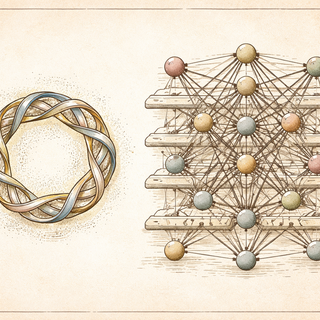
That ring is a plasmid - a small piece of DNA that lives outside the main bacterial chromosome, replicates on its own, and often carries very inconvenient gifts like antibiotic resistance genes. The mystery at the center of this new Nature Communications paper is simple to ask and annoying to answer: why do some plasmids show up in a cell as a handful of copies, while others arrive like they own the place? Shahzadi and colleagues went after that question with an unusual combo platter - theory plus machine learning - and found that plasmid copy number is not random chaos in a lab coat [1].
The Crime Scene: Too Many Copies, Too Much Trouble
Plasmid copy number matters because biology charges by the copy. More copies can mean more resistance genes, more toxin genes, more molecular noise, and more evolutionary opportunities for bacteria to pull off a quick costume change under stress [2,3]. But more copies also cost the cell energy. Every extra plasmid is another little photocopy job the microbe has to finance.
Researchers already knew about a broad pattern: bigger plasmids usually exist in fewer copies. That size-versus-copy-number trend follows a power law, meaning the drop is not linear and tidy, but still regular enough to smell like a rule rather than a coincidence [4,5]. Nice clue. Not enough to solve the case.
This paper starts there, then asks the more interesting question: if size alone is a blunt instrument, what other features actually help predict copy number?
The Suspects: Size, Ecology, and Protein Gizmos
The team analyzed 11,051 plasmids and built a machine learning model using multiple features instead of treating plasmid length as the whole story [1]. That improved prediction substantially. The biggest clue was not just size, but the protein domains encoded on the plasmids themselves.
Protein domains are like reusable attachments on molecular tools. Swap the drill bit, get a different job. In plasmids, those domains can hint at replication control, maintenance systems, mobility, partitioning, and other behaviors that affect how many copies stick around in a cell. Translation: the plasmid is not just luggage. The luggage contains instructions for how aggressively it should duplicate itself and how hard it should fight eviction.
That matters because plasmids are deeply weird little operators. Some are built for quiet persistence. Some are built to spread. Some carry resistance genes and become a major public-health nuisance the minute antibiotics enter the room like a detective with a warrant.
The authors then pushed the model beyond curated datasets and into the wild: hundreds of thousands of metagenomic plasmids in IMG/PR and tens of thousands of clinical isolates [1]. That let them map probable copy-number hotspots across environments and taxa, including patterns in the gut plasmidome, which remains one of microbiology's more crowded dark alleys [6,7].
The Plot Twist: Machine Learning Did Not Replace Theory. It Brought a Flashlight.
This is the part I like. The paper does not do the usual "we fed the black box and the black box spoke" routine. It starts with theory, specifically the size-copy-number scaling law, then uses machine learning to capture the biological messiness that theory alone misses.
That is a much healthier relationship than the classic AI move where we throw a model at a problem like confetti at a wedding and hope one piece lands on causality. Here, theory supplies the skeleton. Machine learning adds muscle, scar tissue, and a few fingerprints.
The broader context backs that up. Recent work found universal rules linking plasmid length and copy number across thousands of genomes [4], while related studies showed copy number can shape transient antibiotic resistance, evolvability, and pathogen behavior [2,3,8]. Meanwhile, gut metagenomics studies keep finding oceans of plasmids we barely know how to classify, let alone predict [6,7]. So this new paper lands at exactly the right moment: the plasmid universe is getting larger, and our old hand-labeled field guide is not keeping up.
Why You Should Care Before Your Drink Gets Warm
If this framework holds up, it could sharpen antibiotic resistance surveillance by helping researchers estimate which plasmids are likely to amplify dangerous genes and persist in clinical or environmental settings [1,8]. It could also help synthetic biologists design plasmids with more predictable behavior instead of relying on vibes, folklore, and one postdoc who knows which backbone is "usually fine."
There are limits, and the authors do not hide them. Prediction is not explanation. Ecological trends from huge metagenomic datasets are still hypothesis-generating. And plasmids are notorious for context dependence, which is science-speak for "the suspect behaves differently in every neighborhood."
Still, the training logs from this investigation tell a pretty convincing story. The old clue was that plasmid size matters. The new clue is that plasmid content matters too, especially the protein domains that reveal what kind of molecular hustler you're dealing with. Put those clues together, and the case gets a lot less cold.
References
-
Shahzadi I, Xue W, Ubaid Ullah H, Maddamsetti R, You L, Wang T. Integrating theory and machine learning to reveal determinants of plasmid copy number. Nature Communications. 2026. DOI: https://doi.org/10.1038/s41467-026-72303-0. PubMed: https://pubmed.ncbi.nlm.nih.gov/42020421/
-
Hernandez-Beltran JCR, Rodríguez-Beltrán J, Aguilar-Luviano OB, et al. Plasmid-mediated phenotypic noise leads to transient antibiotic resistance in bacteria. Nature Communications. 2024;15:2610. DOI: https://doi.org/10.1038/s41467-024-45045-0
-
Wang H, Joffré E. Plasmid copy number as a modulator in bacterial pathogenesis and antibiotic resistance. npj Antimicrobials and Resistance. 2025;3:72. DOI: https://doi.org/10.1038/s44259-025-00145-9
-
Ramiro-Martínez P, de Quinto I, Lanza VF, et al. Universal rules govern plasmid copy number. Nature Communications. 2025;16:6022. DOI: https://doi.org/10.1038/s41467-025-61202-5
-
Maddamsetti R, Shyti I, Wilson ML, et al. Scaling laws of bacterial and archaeal plasmids. Nature Communications. 2025;16:6023. DOI: https://doi.org/10.1038/s41467-025-61205-2
-
Yu MK, Fogarty EC, Eren AM. Diverse plasmid systems and their ecology across human gut metagenomes revealed by PlasX and MobMess. Nature Microbiology. 2024;9:830-847. DOI: https://doi.org/10.1038/s41564-024-01610-3
-
He W, Russel J, Klincke F, et al. Insights into the ecology of the infant gut plasmidome. Nature Communications. 2024;15:6924. DOI: https://doi.org/10.1038/s41467-024-51398-3
-
Li X, Gyorgy A. Tuning evolvability via plasmid copy number and regulatory architecture. Nature Communications. 2026;17:1230. DOI: https://doi.org/10.1038/s41467-025-67995-9
Disclaimer: This blog post is a simplified summary of published research for educational purposes. The accompanying illustration is artistic and does not depict actual model architectures, data, or experimental results. Always refer to the original paper for technical details.