This paper lands like the moment on Succession when the side character you underestimated suddenly grabs the wheel and everybody at the table has to recalculate. For years, a lot of cancer drug progress looked like making better versions of familiar stuff. Useful, yes. Dramatic, not always. But this review argues that first-in-class oncology drugs, meaning the first medicines to hit a brand-new target or use a genuinely new mechanism, have started to reshape the whole map of cancer treatment in a much weirder, more inventive direction [1].
First-in-class, in normal-person English
A first-in-class drug is not just "new." It is new in the way a submarine is new compared with a canoe. Same ocean, wildly different strategy.
Mao and colleagues reviewed global approvals from 2009 through 2024 and found 93 approved first-in-class oncology drugs, along with 1,578 potential first-in-class candidates somewhere in clinical development [1]. They sort this innovation into four buckets: drugs that hit new targets, drugs that go after new mutation subtypes, drugs that use new therapeutic modalities, and drugs that attack multiple targets at once.
That sounds tidy on paper, but the real takeaway is messier and more interesting. Cancer drug development is no longer just about finding one more receptor to block. It is also about inventing new delivery systems, new molecular tricks, and new ways to chase tumors that used to behave like greased raccoons in a locked attic.
The drug cabinet got strange, and that is the point
The review shows that most approved first-in-class drugs still come from target novelty. Find a target nobody has successfully drugged before, and you have a shot. But the pipeline is shifting hard toward modality innovation: cell therapies, gene therapies, antibody-drug conjugates, bispecific antibodies, cancer vaccines, and PROTAC-style protein degraders [1].
Translation: scientists are not just making smarter bullets. They are building heat-seeking boomerangs, double-ended grappling hooks, and tiny molecular repo men that slap an eviction notice on problem proteins.
That shift lines up with the broader oncology literature. Recent reviews show antibody-drug conjugates becoming a major platform, not a niche gimmick, while bispecific antibodies are moving from clever concept to serious therapeutic class [3,4]. In 2024, the FDA also approved new cancer agents across small molecules, bispecifics, antibody-drug conjugates, and cell or gene therapies, which tells you this is not a lab-only fantasy league [5]. The paper notes that 2024 was a record year, with 12 first-in-class oncology approvals worldwide [1].
And then things get even more specific. The review highlights targets like DLL3, CLDN18.2, and MAGE-A4, plus examples such as first approved TCR-based cell therapy. This is precision oncology getting less "we found a marker" and more "we built a custom lockpick for one nasty molecular door."
The annoying part: biology still refuses to cooperate
Now for the part biotech press releases usually leave in the trunk.
Being first-in-class does not guarantee big clinical benefit. A 2024 analysis in Clinical Pharmacology & Therapeutics found that more than half of first-in-class medicines did not clearly translate their mechanistic novelty into additional clinical benefit for patients [2]. That does not make the science fake. It just means novelty and usefulness are not the same thing, which is a distinction the drug world occasionally treats like an optional side quest.
Mao and colleagues are pretty direct about the bottlenecks: target discovery is still hard, clinical attrition is still brutal, resistance still evolves, and global access remains wildly uneven [1]. You can invent a dazzling therapy, and then the tumor adapts, the trial disappoints, manufacturing gets ugly, or the price tag looks like it was generated by a villain with a spreadsheet.
That is especially true for newer modalities. Cell therapies can be powerful, but scaling them is not like printing extra aspirin. ADCs can hit tumors more precisely, but they still wrestle with toxicity and resistance [3]. Bispecifics open new immune strategies, but they bring their own design and safety headaches [4]. Cancer biology, as always, remains the coworker who replies to every good idea with "cool, but I made three new problems."
The map is changing, not just the molecules
One of the more telling details in the review is geographic. The United States accounted for 75 of the 93 launch markets, or about 80.6%, though China, Japan, and Europe are all active in the picture [1]. A 2025 review on Chinese drug development argues that China is becoming much more influential through policy support, biotech investment, and faster regulatory pathways, especially in oncology [6].
So the story here is not just that cancer drugs are getting smarter. It is that the global machinery behind them is changing too. And then that affects who gets therapies first. And then that affects which companies invest where. And then that affects which ideas survive the expensive obstacle course from promising molecule to actual patient.
That is what makes this review worth reading. It is not a victory speech. It is a field report from a part of medicine that has gotten more inventive, more crowded, and more complicated all at once. The future of oncology may belong to the teams that can do three things at the same time: find better targets, build stranger tools, and somehow make the results reachable outside a handful of wealthy systems.
References
-
Mao X, Wang Z, Kong S, et al. The evolving global landscape of first-in-class oncology drug innovation. Signal Transduction and Targeted Therapy. 2026;11:174. DOI: 10.1038/s41392-026-02606-7
-
Osipenko L, Potey P, Perez B, et al. The Origin of First-in-Class Drugs: Innovation Versus Clinical Benefit. Clinical Pharmacology & Therapeutics. 2024;115(2):342-348. DOI: 10.1002/cpt.3110
-
Tsuchikama K, Anami Y, Ha SYY, et al. Exploring the next generation of antibody-drug conjugates. Nature Reviews Clinical Oncology. 2024;21:203-223. DOI: 10.1038/s41571-023-00850-2
-
Klein C, Brinkmann U, Reichert JM, Kontermann RE. The present and future of bispecific antibodies for cancer therapy. Nature Reviews Drug Discovery. 2024;23:301-319. DOI: 10.1038/s41573-024-00896-6
-
Agrawal S, Park E, Kluetz PG. FDA approvals in 2024: new options for patients across cancer types and therapeutic classes. Nature Reviews Clinical Oncology. 2025;22:457-458. DOI: 10.1038/s41571-025-01018-w
-
Ma M, Liu X, Gao J, et al. Current landscape of innovative drug development and regulatory support in China. Signal Transduction and Targeted Therapy. 2025. DOI: 10.1038/s41392-025-02267-y
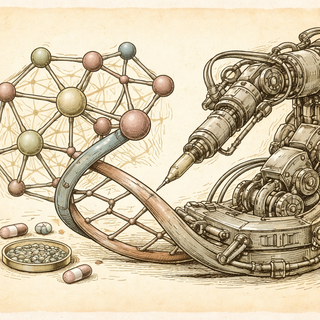
Disclaimer: This blog post is a simplified summary of published research for educational purposes. The accompanying illustration is artistic and does not depict actual model architectures, data, or experimental results. Always refer to the original paper for technical details.