A few immune molecules showed up in a rat hippocampus slice and, very casually, turned the brain's timing system into laggy online multiplayer.
That is the core replay from Malorny and colleagues' 2026 paper in Journal of Neuroinflammation: expose hippocampal slice cultures to TNF-alpha for 72 hours, then watch microglia - the brain's resident immune security team - change the whole match. Add IFN-gamma and the situation goes from "annoying debuff" to "ranked match disaster." Gamma oscillations weaken, neural networks start bursting, and in the worst cases electrical activity drops out like the server rage-quit.
Gamma Oscillations Are the Brain's High-APM Mode
Gamma oscillations are fast rhythmic brain waves, roughly 30-70 Hz in this study. They help coordinate local neural circuits involved in attention, perception, and memory. Think of them as the brain's high-actions-per-minute mode: not consciousness magic, not sci-fi mind juice, just a very fast timing pattern that helps neurons play together instead of mashing buttons independently.
In healthy tissue, the researchers could induce gamma rhythms using carbachol. In the TNF-alpha treated slices, fewer slices could generate those rhythms. Some shifted into bursting, which is basically the neural equivalent of spamming one move because the controller got sticky.
Acute TNF-alpha exposure for 30 minutes did not cause the same dysfunction. That matters. This was not a jump-scare effect. The bad matchup needed time to build.
Microglia Enter the Lobby
Microglia are not villains. They clear debris, shape synapses, respond to injury, and generally do maintenance work while neurons get all the fame and poster slots. S-tier support class, historically under-credited.
But immune activation has builds, and some builds are cursed.
After chronic TNF-alpha exposure, microglia proliferated and increased genes tied to inflammation and oxidative stress, including Il6, Nos2, and Sod2. Nos2 encodes inducible nitric oxide synthase, or iNOS, which produces nitric oxide. Nitric oxide can be useful signaling chemistry in the right amount, but too much in the wrong context is like turning on friendly fire and pretending it is "advanced strategy."
The paper's key claim is not just "inflammation bad." That would be a Bronze-tier analysis. The interesting bit is the chain: TNF-alpha activates microglia, microglia ramp up nitric oxide and oxidative stress pathways, neurons lose clean rhythmic function, and the network either bursts or goes quiet.
The IFN-Gamma Combo Is Absolutely OP
Then the authors tested TNF-alpha plus IFN-gamma. IFN-gamma is a cytokine often linked to T cell activity, and prior work showed it can prime microglia and slow gamma oscillations through nitric oxide release. In gamer terms, IFN-gamma is the patch note that says "minor adjustment" and then ruins the entire meta.
Together, TNF-alpha and IFN-gamma amplified the inflammatory response. Neural activity became dominated by bursting or loss of electrical activity. Intracellular recordings showed neurons firing a brief burst, then slowing down with a pronounced afterhyperpolarization. Translation: the neuron opens strong, spends all its stamina, then sits there like it forgot cooldown management exists.
This is intriguing because diseases like sepsis, multiple sclerosis, Alzheimer's disease, depression, and schizophrenia can involve neuroinflammation, blood-brain barrier disruption, immune cell invasion, or activated microglia. The paper does not prove this exact mechanism explains those conditions in people. It used rat hippocampal slice cultures, which are controlled and useful, but not a full living brain with all the messy side quests unlocked. Still, it gives a plausible mechanism worth taking seriously.
The Counterplay Exists
Here is where the study gets spicy: several interventions helped.
Blocking iNOS reduced the impairment. Inhibiting NADPH oxidase helped. Glucose supplementation helped. Depleting microglia helped. Blocking TNF receptor 1 signaling with small molecules RIPA-56 and ICCB-19 also helped.
That is a pretty clean tier list of counterplay. The researchers did not just observe the crash; they tested where the crash might be coming from. Nitric oxide, oxidative stress, energy metabolism, microglia, and TNFR1 signaling all look like suspects with fingerprints on the keyboard.
The glucose result is especially interesting. Gamma rhythms are metabolically expensive. Fast network coordination needs fuel. If inflammation creates oxidative and metabolic stress, gamma oscillations may be one of the first systems to start dropping frames. Your brain, tragically, does not have a "lower graphics settings" menu.
Why This Match Matters
The big value of this study is that it connects immune signaling to circuit-level function. Many papers talk about inflammation and neurodegeneration as if someone spilled soup on the brain and everything got generically worse. This paper gives a more playable map: specific cytokines, specific microglial pathways, specific electrical failures, and testable pharmacological rescue.
It also fits with recent work showing two-way traffic between brain rhythms and microglia. Prichard and colleagues reported that 40 Hz visual flicker can alter microglial morphology and cytokine expression through NF-kappaB signaling. So the relationship is not simply "immune cells affect neurons." The rhythm of neural activity may also push immune signaling around. That is less like a single boss fight and more like a badly balanced multiplayer economy.
Final rating: mechanistic clarity, A-tier. Human translation, still unranked. Therapeutic hints, promising but not ready for the championship bracket. The study gives us a strong replay to analyze, but the next matches need living systems, disease models, and eventually clinical evidence before anyone starts declaring a meta shift.
References
-
Malorny N, Chausse B, Khodaie B, et al. "TNF-alpha and IFN-gamma impair neural oscillations and induce neurodegeneration by microglial nitric oxide, metabolic and oxidative stress." Journal of Neuroinflammation 2026. DOI: 10.1186/s12974-026-03835-x
-
Ta T-T, Dikmen HO, Schilling S, et al. "Priming of microglia with IFN-gamma slows neuronal gamma oscillations in situ." PNAS 2019. DOI: 10.1073/pnas.1813562116, PMCID: PMC6410786
-
Kann O, Almouhanna F, Chausse B. "Interferon gamma: a master cytokine in microglia-mediated neural network dysfunction and neurodegeneration." Trends in Neurosciences 2022. DOI: 10.1016/j.tins.2022.10.007
-
Prichard A, Garza KM, Shridhar A, et al. "Brain rhythms control microglial response and cytokine expression via NF-kappaB signaling." Science Advances 2023. DOI: 10.1126/sciadv.adf5672, PMCID: PMC10411883
-
Deng Q, Wu C, Parker E, et al. "Mystery of gamma wave stimulation in brain disorders." Molecular Neurodegeneration 2024. DOI: 10.1186/s13024-024-00785-x
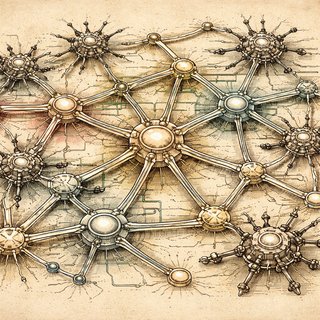
Disclaimer: This blog post is a simplified summary of published research for educational purposes. The accompanying illustration is artistic and does not depict actual model architectures, data, or experimental results. Always refer to the original paper for technical details.