For years, AI in headache care sounded like one sailor scraping away on a fiddle; Stubberud's new paper asks what happens when the whole orchestra climbs aboard.
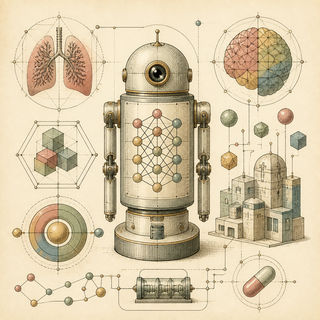
That orchestra has sections. One bench plays diagnosis: migraine, cluster headache, tension-type headache, medication overuse, and the whole foggy fleet of "my head hurts, please make it stop." Another plays forecasting: will tomorrow bring calm seas, or will a migraine attack roll in like weather with a grudge? A third handles treatment matching: which medication, device, behavioral tool, or prevention plan might work for this particular patient, not the statistically average patient who lives only in journal tables and never forgets to fill out a diary?
Anker Stubberud's 2026 Nature Reviews Neurology comment, Artificial intelligence in headache care, is short, but it plants its flag in the right place: AI has promising uses in headache diagnosis, disease forecasting, and treatment optimization, yet the field still has a wide channel between shiny technical results and tools that actually help patients in clinics.
That channel is where many a model has run aground.
The Headache Map Is Not a Kiddie Pool
Headache medicine looks simple from shore. Pain in head, ask questions, prescribe thing. Easy, yes? No. That is how you end up steering by vibes and calling it navigation.
Migraine is a neurological disorder with symptoms that can include nausea, light sensitivity, sound sensitivity, dizziness, aura, brain fog, and the personal betrayal of being defeated by a normal lamp. Cluster headache, tension-type headache, secondary headaches, and medication overuse add more reefs to the chart. Patients also arrive with messy histories, incomplete records, changing triggers, comorbid anxiety or depression, sleep disruption, hormonal patterns, weather sensitivity, and treatment histories long enough to qualify as maritime law.
Machine learning likes this sort of mess, in theory. Give it symptom questionnaires, electronic health records, smartphone diaries, wearable data, imaging, genetics, or medication response histories, and it can hunt for patterns. Not magic. More like a very caffeinated deckhand sorting ropes by moonlight.
Recent work shows the pieces are moving. Katsuki and colleagues built an AI diagnostic model from headache clinic records in 2023 (DOI: 10.1111/head.14611). Stubberud and coauthors reviewed the broader field in 2024 (DOI: 10.1177/03331024241268290). A 2025 systematic review by Espinoza-Vinces and colleagues examined AI in headache medicine through the awkward but necessary lens of automation and the doctor-patient relationship (DOI: 10.1186/s10194-025-02143-8).
In other words: the ship has sails, charts, and a crew. It does not yet have a trustworthy harbor master.
Forecasting the Storm Before It Hits
The most intriguing promise may be migraine forecasting. Imagine your phone warning, "Tomorrow looks risky, captain. Hydrate, sleep, avoid the fluorescent dungeon, and maybe do not schedule the three-hour budget meeting." That is not a cure, but for people whose lives get ambushed by attacks, even a partly reliable warning could change the day.
The trouble is that migraine prediction is a hard sea. Triggers vary by person. Data are noisy. A smartwatch can measure sleep and heart rate, but it cannot yet measure "your coworker reheated fish in the office microwave," which medical science has somehow failed to standardize.
Forecasting models also need prospective testing. It is one thing to predict old diary entries after the fact. It is another to guide real patients, in real time, without crying wolf so often that everyone throws the app overboard.
Treatment Matching: Dead Reckoning With Better Instruments
Treatment optimization is the other big prize. Migraine prevention can involve CGRP-targeting drugs, beta blockers, antidepressants, anticonvulsants, botulinum toxin, neuromodulation, behavioral therapy, and lifestyle work. Choosing among them can feel like dead reckoning through fog.
Pardo and colleagues reviewed AI and machine learning for migraine treatment outcome prediction in 2025 (DOI: 10.1177/03331024251395541). The hope is sensible: use patient features to estimate which treatment is more likely to help, sparing people months of trial and error. The warning is just as sensible: a model that performs nicely in one dataset may founder elsewhere if the patients, clinic habits, or measurement methods change.
I have seen many a model boast of 90% accuracy while quietly training on a puddle and calling it the Atlantic.
The Real Test Is the Clinic
Healthcare AI has a recurring problem: strong demos, thin clinical proof. Han and colleagues' 2024 scoping review of randomized trials in clinical AI found growing evidence, but also uneven study designs and limited real-world evaluation (DOI: 10.1016/S2589-7500(24)00047-5). The FUTURE-AI guidelines argue for fairness, universality, traceability, usability, robustness, and explainability across the whole lifecycle of medical AI (DOI: 10.1136/bmj-2024-081554).
That is the compass Stubberud's paper points toward. Not "AI replaces the neurologist." More like: AI becomes a careful navigator that helps clinicians see patterns faster, predict rough water earlier, and choose treatments with less guesswork.
But the captain still needs to ask: Who was in the training data? Does it work outside the original clinic? Can the patient understand why a recommendation appeared? Does it help outcomes, or merely decorate the dashboard with confident nonsense?
Because in headache care, the goal is not a clever machine. The goal is fewer lost days, fewer emergency visits, fewer failed treatments, and patients who can make plans without watching the sky like cursed sailors.
References
-
Stubberud, A. Artificial intelligence in headache care. Nature Reviews Neurology (2026). https://doi.org/10.1038/s41582-026-01226-7
-
Stubberud, A., Langseth, H., Nachev, P., Matharu, M. S., & Tronvik, E. Artificial intelligence and headache. Cephalalgia 44 (2024). https://doi.org/10.1177/03331024241268290
-
Espinoza-Vinces, C. et al. Artificial intelligence in headache medicine: between automation and the doctor-patient relationship. A systematic review. The Journal of Headache and Pain 26, 192 (2025). https://doi.org/10.1186/s10194-025-02143-8
-
Katsuki, M. et al. Developing an artificial intelligence-based diagnostic model of headaches from a dataset of clinic patients' records. Headache 63, 1097-1108 (2023). https://doi.org/10.1111/head.14611
-
Pardo, K., Schwedt, T. J., Cutrer, F. M., & Chiang, C.-C. The promise of artificial intelligence and machine learning for migraine treatment outcome prediction: a narrative review. Cephalalgia 45 (2025). https://doi.org/10.1177/03331024251395541
-
Han, R. et al. Randomised controlled trials evaluating artificial intelligence in clinical practice: a scoping review. The Lancet Digital Health 6, e367-e373 (2024). https://doi.org/10.1016/S2589-7500(24)00047-5
-
Lekadir, K. et al. FUTURE-AI: international consensus guideline for trustworthy and deployable artificial intelligence in healthcare. BMJ 388, e081554 (2025). https://doi.org/10.1136/bmj-2024-081554
Disclaimer: This blog post is a simplified summary of published research for educational purposes. The accompanying illustration is artistic and does not depict actual model architectures, data, or experimental results. Always refer to the original paper for technical details.