This is a paper about bodies running out of easy oxygen.
That sounds simple, almost rude in its simplicity. Then the implications start unpacking themselves like a backpack you definitely overfilled: brain swelling, leaky lungs, strained hearts, stressed kidneys, confused immune cells, fragile newborns, older travelers, workers, soldiers, climbers, tourists, and whole communities living where the atmosphere is basically saying, "Good luck, champ."
In Advancing high-altitude medicine: a model for the future, Sun and colleagues argue that high-altitude medicine needs a bigger map. Not just "this person has acute mountain sickness" or "that person has pulmonary edema," but a connected framework for how low oxygen can stress multiple organs at once. They call it the Hypoxia Stress-induced Multi-organ Injury Spectrum, or HSMI, which sounds like a secret agency but is really a way to stop treating altitude illness like scattered medical postcards from the same mountain.1
The Mountain Is Not Attacking One Organ at a Time
At high altitude, the problem starts with hypobaric hypoxia: air pressure drops, oxygen becomes harder to pull into the bloodstream, and your body has to improvise. Sometimes it improvises beautifully. You breathe faster, your heart pumps harder, your kidneys adjust blood chemistry, and your red blood cell system gets the memo.
Other times, the body responds like a group chat during a minor emergency: too many messages, unclear leadership, someone makes it worse.
Altitude sickness can show up as headache, nausea, fatigue, dizziness, poor sleep, or, in severe cases, high-altitude cerebral edema and high-altitude pulmonary edema.2 Current clinical guidance still leans heavily on symptoms, ascent history, oxygen support, descent, acetazolamide, dexamethasone, and other practical tools that work in real mountains with real weather and real people making real questionable itinerary choices.3
Sun and colleagues are not saying those tools are useless. They are saying the science underneath them is still too fragmented. The brain paper talks to the brain people. The lung paper talks to the lung people. The immune paper waves from across the conference hall. Meanwhile, the patient is inconveniently one whole organism.
Enter HSMI, the Spreadsheet With a Pulse
The HSMI idea reframes altitude illness as a connected injury spectrum driven by hypoxia stress. Instead of asking only, "Which disease label fits?" it asks, "Which systems are being stressed, through which pathways, in which person, and how early can we catch it?"
That shift matters because people vary wildly. One person hikes to 3,700 meters and feels mildly dramatic. Another person at the same altitude develops serious symptoms. Fitness does not grant diplomatic immunity. The mountain does not care about your VO2 max or your trail-running watch.
The review points to three major gaps: we do not fully understand individual susceptibility, diagnosis still relies too much on subjective scoring, and basic discoveries often fail to become usable clinical tools.1 That last part is the classic biomedical translation problem: the lab finds a beautiful molecular pathway, then the clinic asks, "Cool, can I use it in a freezing tent with one battery bar?"
Where Machine Learning Actually Earns Its Snacks
This is where multi-omics and machine learning enter, hopefully wearing sensible shoes. Multi-omics means combining layers of biological data: genes, proteins, metabolites, immune cell behavior, maybe imaging and wearable signals too. Machine learning can help spot patterns across this messy biological lasagna.
Recent work shows why that is tempting. A 2025 study used single-cell and bulk RNA sequencing plus machine learning to identify an eight-gene blood signature for acute mountain sickness, reporting strong training performance and more modest external validation.4 Another 2025 Cell Reports study profiled climbers during high-altitude mountaineering and found changing immune and metabolic responses, including signs of oxidative stress adaptation.5
That is not magic. It is pattern detection. The computer is not becoming a mountain doctor. It is more like an extremely caffeinated research assistant who can compare thousands of biological Post-it notes without crying in the supply closet.
The catch, of course, is validation. Models trained on one cohort can become very confident and very wrong somewhere else. Altitude medicine especially needs broader datasets: different ancestries, ages, sexes, health backgrounds, altitudes, ascent rates, and chronic exposure patterns. Otherwise, precision medicine becomes "precision for the people who happened to be in the spreadsheet."
The Future Looks Like Earlier Warnings, Not Sci-Fi Clinics
The most useful future here is practical: objective biomarkers, portable imaging, wearable oxygen and heart-rate data, and risk models that warn clinicians before symptoms get scary. The U.S. Army has even been testing wearable-linked acute mountain sickness prediction tools that aim to forecast risk hours before symptoms appear.6
That is the real promise of the HSMI framework. Not hype. Not a tricorder. Just better timing, better prediction, and treatments aimed at mechanisms instead of vibes.
If this model holds up, high-altitude medicine could move from "How bad do you feel right now?" to "Your biology is trending toward trouble, and we should act before your lungs file a formal complaint."
That would help climbers and trekkers, yes, but also miners, military teams, highland residents, pregnant people, newborns, older adults, and patients with heart or lung disease traveling to altitude. The paper’s strongest idea is not that altitude illness is mysterious. It is that the mystery has been divided into too many little boxes.
The mountain is one environment. The body is one system. Medicine should probably stop pretending otherwise.
References
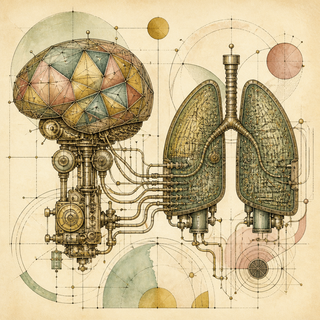
Disclaimer: This blog post is a simplified summary of published research for educational purposes. The accompanying illustration is artistic and does not depict actual model architectures, data, or experimental results. Always refer to the original paper for technical details.
-
Sun W, Zhang X, Chen L, Chen L, Deng C, Wu S, Luo F. "Advancing high-altitude medicine: a model for the future." Signal Transduction and Targeted Therapy. 2026;11:228. DOI: 10.1038/s41392-026-02836-9. PMID: 42270611. ↩↩
-
"Altitude sickness." Wikipedia. Background on altitude illness symptoms, causes, and treatment. https://en.wikipedia.org/wiki/Altitude_sickness ↩
-
Luks AM et al. "Wilderness Medical Society Clinical Practice Guidelines for the Prevention, Diagnosis, and Treatment of Acute Altitude Illness: 2024 Update." Wilderness & Environmental Medicine. 2024;35(1):2S-19S. DOI: 10.1016/j.wem.2023.05.013. ↩
-
Yang D et al. "Machine learning integration identifying an eight-gene diagnostic signature for acute mountain sickness." Frontiers in Medicine. 2025. DOI: 10.3389/fmed.2025.1688025. ↩
-
Yin J et al. "Multi-omics reveals immune response and metabolic profiles during high-altitude mountaineering." Cell Reports. 2025;44(1):115134. DOI: 10.1016/j.celrep.2024.115134. ↩
-
U.S. Army. "A next-generation acute mountain sickness prevention tool that aims to help Soldiers and Civilians." 2024. https://www.army.mil/article/279896/a_next_generation_acute_mountain_sickness_prevention_tool_that_aims_to_help_soldiers_and_civilians ↩