“Multiomics- and artificial intelligence-powered research platforms for enhancing understanding and prediction of the cholangiocarcinoma patient journey” is a lot of words doing a lot of cardio. Plain English version: researchers want to combine many kinds of biological data with machine learning so doctors can better understand, predict, and maybe personalize care for people with cholangiocarcinoma, a nasty bile duct cancer that does not exactly RSVP before showing up.
Cholangiocarcinoma, or CCA, starts in the bile ducts, the little plumbing system that helps move bile from the liver and gallbladder into the intestine. It is rare, aggressive, and often found late because early symptoms can be quiet or vague. Basically, the disease has the stealth mode of a video game boss and the bedside manner of a printer error.
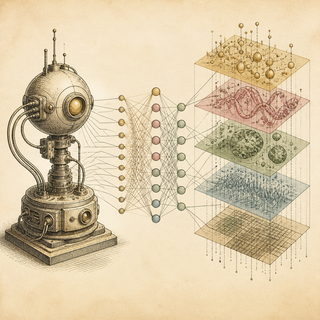
The Gut article by Fernando Corrales and Vincenzo Cardinale is not a huge new clinical trial. PubMed lists no abstract, which is always a tiny academic jump scare. But the piece lays out a bigger argument: CCA research needs platforms that connect the whole patient story, not just one biopsy, one scan, or one blood test floating alone in the medical void.
Omics: Biology's Group Chat
“Multiomics” sounds like a startup name invented after too much espresso, but it has a useful meaning. It means combining multiple layers of biological information: genomics, transcriptomics, proteomics, metabolomics, maybe radiology, pathology, and clinical history too. One layer tells you about DNA. Another tells you which genes are active. Another tells you which proteins are actually doing stuff. Because biology, naturally, refused to keep its notes in one folder.
For CCA, this matters because tumors are not all the same. Even tumors with the same anatomical label can behave differently, respond differently, and relapse differently. The old approach is like sorting every soup by bowl size. Helpful? Maybe. Enough? Absolutely not.
Corrales and Cardinale frame this around precision medicine: prevention, earlier diagnosis, better risk prediction, and therapies matched to the patient’s actual disease biology. That sounds sensible because it is. The hard part is making the data behave. Multiomics datasets are huge, messy, expensive, uneven, and collected by humans, which means there is always a spreadsheet somewhere quietly plotting revenge.
Where AI Earns Its Coffee
Machine learning is good at spotting patterns across messy inputs, assuming you train it carefully and do not let it become a confident nonsense machine. In CCA, recent work is already moving in this direction.
A 2025 bibliometric review found that AI research in CCA has grown sharply since 2019, with hotspots around diagnosis, metastasis risk, and recurrence prediction Wang et al., 2025. Another review focused on radiomics, where algorithms mine CT or MRI scans for image patterns that human eyes might miss, like a radiologist with a texture obsession and no need for lunch Diagnostics, 2025.
Then there are studies that go more multimodal. Brion and colleagues combined clinical, histology, radiology, and targeted sequencing data to predict survival and recurrence in intrahepatic CCA. Their models reached a concordance index up to 0.70 in held-out patients, which is promising, though not “throw away the tumor board” promising Brion et al., 2025. Meanwhile, Mun and colleagues used multiomics plus machine learning to define molecular CCA subtypes and point toward TNK1 as a possible therapeutic target Mun et al., 2025.
That is the dream: not just “this patient has CCA,” but “this patient has this biological flavor of CCA, with these risks, and these therapies might make more sense.” Medicine, but with fewer shrug emojis.
The Patient Journey, Not Just the Tumor Selfie
The phrase “patient journey” can sound like hospital brochure language, but here it matters. A patient’s disease changes over time. Risk before diagnosis, early warning signals, treatment response, relapse, progression - those are all different chapters. A single tissue sample is a snapshot. Useful, yes. But CCA is not politely standing still for its portrait.
The platform idea is to connect time, tumor heterogeneity, liquid biopsies, tissue omics, imaging, and clinical outcomes. If done well, AI could help find biomarkers that are not just statistically shiny but biologically meaningful. Because a model that predicts well for mysterious reasons is cool in a Kaggle competition. In oncology, “trust me bro” is not a regulatory strategy.
Explainability matters. Validation matters. Diverse datasets matter. So does avoiding models that work beautifully at one hospital and then fall apart somewhere else like a folding chair at a wedding.
The Catch, Because Of Course There Is One
This whole field has real obstacles. CCA is rare, so sample sizes are often small. Multiomics data can be expensive and hard to standardize. Clinical labels may be inconsistent. AI models can overfit, especially when the dataset is smaller than the model’s ego. And before any of this changes care, researchers need prospective validation, external cohorts, and workflows doctors can actually use without summoning an IT priest.
Still, the direction is compelling. CCA needs better early detection, better recurrence prediction, and better therapy selection. Multiomics gives researchers a richer map. AI gives them a way to search the map without getting lost in 40 tabs and a panic snack.
If the work keeps moving from elegant research platforms into validated clinical tools, the payoff could be big: earlier warnings, smarter trials, more precise patient grouping, and treatment plans based less on averages and more on the biology sitting in front of the doctor.
Not magic. Not a robot oncologist. Just better pattern-finding in a disease where the patterns have been too easy to miss.
References
-
Corrales F, Cardinale V. Multiomics- and artificial intelligence-powered research platforms for enhancing understanding and prediction of the cholangiocarcinoma patient journey. Gut. 2026;75(7):1272-1274. DOI: 10.1136/gutjnl-2025-337219. PMID: 41344699
-
Wang KX, Li YT, Yang SH, Li F. Research trends and hotspots evolution of artificial intelligence for cholangiocarcinoma over the past 10 years: a bibliometric analysis. Frontiers in Oncology. 2025. DOI: 10.3389/fonc.2024.1454411
-
Calderaro J, Ghaffari Laleh N, Zeng Q, et al. Deep learning-based phenotyping reclassifies combined hepatocellular-cholangiocarcinoma. Nature Communications. 2023;14:8290. DOI: 10.1038/s41467-023-43749-3. PMID: 38092727
-
Brion E, Ducret V, Nasar N, et al. Multimodal machine learning models enhance outcome prediction in intrahepatic cholangiocarcinoma. Computers in Biology and Medicine. 2025;198:111189. DOI: 10.1016/j.compbiomed.2025.111189
-
Mun DG, Jessen E, Tomlinson JL, et al. Multiomics combined with machine learning defines unique molecular subtypes of cholangiocarcinoma and identifies TNK1 as a therapeutic target. Hepatology. 2025. DOI: 10.1097/HEP.0000000000001535
Disclaimer: This blog post is a simplified summary of published research for educational purposes. The accompanying illustration is artistic and does not depict actual model architectures, data, or experimental results. Always refer to the original paper for technical details.