A chatbot dressed up as history's most famous physicist just walked into classrooms around the world, and educators are having the kind of heated arguments usually reserved for faculty meetings about coffee budgets. Meet the "Einstein" bot - an AI tutor that's apparently smart enough to explain relativity but still can't figure out why students copy-paste Wikipedia articles at 2 AM.
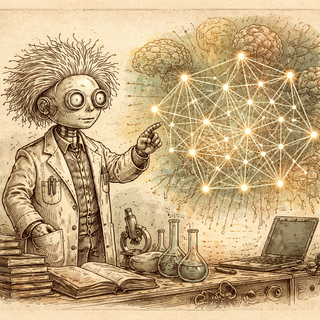
The whole thing reads like a thought experiment Einstein himself might have cooked up: What happens when you give artificial intelligence a lab coat and a teaching degree? According to a recent report in Nature, the answer is "academic chaos with a side of existential dread about the future of education."
The Bot That Thinks It's a Genius
This isn't your average chatbot that responds to everything with "Have you tried turning it off and on again?" The Einstein AI tutor leverages large language models (those pattern-matching overachievers we've been hearing about) to help students work through complex physics and math problems. Think of it as having a really patient teaching assistant who never needs coffee breaks and doesn't judge you for asking what a derivative is for the seventh time.
The bot doesn't just spit out answers - it guides students through problem-solving steps, asks clarifying questions, and apparently does a decent impression of actually understanding what it's talking about. Which is more than you can say for that one professor who clearly hasn't updated their lecture slides since the Clinton administration.
Why Teachers Are Freaking Out (Again)
Here's where things get spicy. Some educators are worried that AI tutors will replace human teachers faster than you can say "budget cuts." Others argue these tools could actually help overwhelmed instructors handle larger class sizes and provide personalized attention to students who need it most.
The real kicker? Early testing suggests students using AI tutors show improved problem-solving skills and better understanding of complex concepts. It's like having a study buddy who actually read the textbook and remembers everything from Chapter 3. Tools like the visual thinking platform at mapb2.io are already helping students organize complex ideas - imagine combining that with an AI that can walk you through quantum mechanics step by step.
The Plot Twist Nobody Saw Coming
But here's where it gets interesting: the "Einstein" bot isn't trying to replace teachers. Instead, it's highlighting something educators have known for years but administrators love to ignore - students need different types of help at different times. Sometimes you need a human to notice you're struggling with confidence, not calculus. Sometimes you need an AI that won't sigh dramatically when you ask it to explain the same physics concept three different ways.
Recent research in educational AI suggests that the most effective learning environments combine human empathy with AI's infinite patience and instant availability. It's not about choosing between robot teachers and human ones - it's about figuring out when each approach works best.
The Real Questions We Should Be Asking
Instead of panicking about AI taking over classrooms, maybe we should be asking better questions: How do we train teachers to work alongside these tools? What happens to educational equity when some schools can afford AI tutors and others can't? And seriously, can we program the bot to stop students from asking "Will this be on the test?" every five minutes?
The Einstein bot controversy reveals something deeper about our relationship with AI in education. We're not just debating whether machines can teach - we're wrestling with what education actually means in an age where information is everywhere and intelligence comes in multiple flavors, biological and artificial.
References
- 'Einstein' bot sharpens debate over AI in the classroom. Nature. 2024. DOI: 10.1038/d41586-026-00764-w. PMID: 41820658. - Disclaimer: This blog post is a simplified summary of published research for educational purposes. The accompanying illustration is artistic and does not depict actual model architectures, data, or experimental results. Always refer to the original paper for technical details.