The Algorithm That Read 31,000 Mammograms So Radiologists Didn't Have To
Somewhere in Cordoba, Spain, a computer just told thousands of women their mammograms looked normal - and it was better at the job than anyone expected. A team led by Esperanza Elías-Cabot ran a prospective clinical trial with 31,301 women and found that an AI system could handle roughly two-thirds of breast cancer screening reads on its own, while actually catching more cancers than the traditional all-human approach (Elías-Cabot et al., 2026).
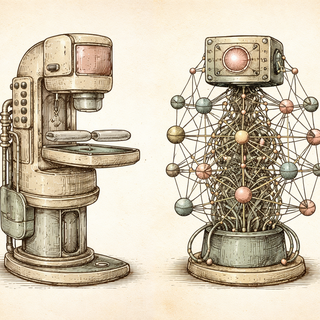
Let that marinate for a second. The machine didn't just match the humans. It beat them. By 15.2%.
How Double Reading Works (and Why Radiologists Are Exhausted)
In most European screening programs, every single mammogram gets read by two independent radiologists. It's the medical equivalent of having two proofreaders check every email you send - thorough, sure, but absolutely brutal on staffing. With radiologist shortages hitting screening programs across Europe like a slow-motion staffing crisis, the question isn't whether AI should help. It's how fast can we prove it's safe.
The AITIC study (that's the trial's name, and yes, it does sound like a DJ) tested this: What if the AI flagged the easy cases as "definitely normal" and only sent the suspicious ones to human radiologists? Two parallel workflows ran on every single exam - the standard two-radiologist double read, and the AI-first triage approach using Transpara, a commercially available AI system from ScreenPoint Medical.
The Numbers That Made Radiologists Do a Double Take
The AI strategy slashed radiologist workload by 63.6%. More than six out of every ten mammograms never needed a human eye. And the cancer detection rate didn't drop - it climbed from 6.3 to 7.3 per 1,000 women screened.
There's a catch, though, and the researchers were upfront about it: the recall rate (women called back for additional testing who turned out to be fine) went up by 14.8%. That's the tradeoff. The AI was more cautious with cases it did flag, which means some extra anxiety-inducing callbacks. The study technically didn't meet its noninferiority goal for recall rate, which is the kind of asterisk that matters in clinical trials even when everything else looks great.
2D vs. 3D: Not All Mammograms Are Created Equal
Here's where it gets interesting. The trial included both standard 2D digital mammography (DM) and the newer 3D digital breast tomosynthesis (DBT) - making it one of the only major AI screening trials to test both. The results split cleanly:
- DBT (3D): Workload dropped 65.5%. Cancer detection and recall rates both stayed stable. Chef's kiss.
- DM (2D): Workload dropped 62.1%. More cancers caught (+1.6 per 1,000), but recall rates also crept up by 1.3 percentage points.
Translation: 3D mammography and AI are apparently best friends. The extra image data from tomosynthesis gives the algorithm more to work with, producing cleaner triage decisions with fewer false alarms.
This Isn't the Only Trial Saying This
The AITIC study lands in a landscape that's been building momentum for three years. Sweden's MASAI trial - the gold standard randomized controlled trial with over 105,000 women - showed AI-supported screening detected 29% more cancers with 44% less reading work, and their final results demonstrated a 12% reduction in interval cancers (the ones that show up between screenings, which are the really scary ones) (Lang et al., 2023; Hernström et al., 2025). Germany's PRAIM study threw nearly half a million women at the question and found an 18% bump in detection with lower recall rates (Eisemann et al., 2025). The UK's GEMINI study trimmed notification time from 14 days to 3 (de Vries et al., 2026).
The pattern across all these trials is remarkably consistent: AI finds more cancers, reduces workload, and generally doesn't make things worse. The AITIC study's 63.6% workload reduction is the highest reported so far, largely because its approach was the most aggressive - letting AI autonomously clear low-risk cases rather than just helping a single reader.
The Part Nobody Wants to Talk About
No AI system currently has regulatory approval for fully autonomous screening decisions. Every cleared device is labeled for "assistive" use only. The AITIC trial's "partially autonomous" workflow - where the AI independently decides certain mammograms are normal - pushes beyond what regulators have greenlit. It's the clinical evidence running ahead of the paperwork, which happens more often in medicine than anyone admits.
There's also the question of what "low risk" means when the AI is the one defining it. The system used a numerical risk score to sort exams, and the threshold matters enormously. Set it too aggressively and you miss cancers. Set it too conservatively and you haven't actually reduced any work. The AITIC team found a sweet spot, but every population, every imaging setup, and every AI version might need its own calibration.
What Comes Next
The US is about to get its own answers. The PRISM trial, a $16 million study across five states, is the first large-scale randomized AI mammography trial in America. Until that data arrives, the evidence base is overwhelmingly European and Korean - valuable, but not sufficient for a healthcare system that screens roughly 40 million women annually.
For now, the AITIC results add to an increasingly hard-to-ignore pile of evidence: AI can meaningfully reduce the human bottleneck in breast cancer screening without sacrificing - and possibly improving - cancer detection. The radiologists aren't being replaced. They're being redirected to the cases that actually need their expertise, which, if you ask most radiologists drowning in normal mammograms, sounds less like a threat and more like a rescue.
If you're the kind of person who likes visualizing how complex decision workflows branch and converge - like an AI triage system routing mammograms through different reading paths - tools like mapb2.io can help map that logic out. Sometimes seeing the flowchart makes the whole system click.
References
-
Elías-Cabot E, Romero-Martín S, Raya-Povedano JL, Rodríguez-Ruiz A, Álvarez-Benito M. AI-based triage and decision support in mammography and digital tomosynthesis for breast cancer screening: a paired, noninferiority trial. Nature Medicine. 2026. DOI: 10.1038/s41591-026-04277-x. PMID: 41857202.
-
Lang K, Josefsson V, Larsson AM, et al. Artificial intelligence-supported screen reading versus standard double reading in the Mammography Screening with Artificial Intelligence trial (MASAI): a clinical safety analysis of a randomised, controlled, non-inferiority, single-blinded, screening accuracy study. The Lancet Oncology. 2023;24(8):936-944. DOI: 10.1016/S1470-2045(23)00298-X. PMID: 37541274.
-
Hernström V, Josefsson V, Sartor H, et al. Screening performance and characteristics of breast cancer detected in the Mammography Screening with Artificial Intelligence trial (MASAI). Lancet Digital Health. 2025;7(3):e175-e183. DOI: 10.1016/S2589-7500(24)00267-X. PMID: 39904652.
-
Eisemann N, Bunk S, et al. Nationwide real-world implementation of AI for cancer detection in population-based mammography screening. Nature Medicine. 2025;31(3):917-924. DOI: 10.1038/s41591-024-03408-6. PMID: 39775040.
-
de Vries CF, et al. Prospective evaluation of artificial intelligence integration into breast cancer screening in multiple workflow settings: the GEMINI study. Nature Cancer. 2026.
-
Xavier D, Miyawaki I, Jorge CAC, et al. Artificial intelligence for triaging of breast cancer screening mammograms and workload reduction: a meta-analysis. Journal of Medical Screening. 2024;31(3):157-165. DOI: 10.1177/09691413231219952. PMID: 38115810.
Disclaimer: This blog post is a simplified summary of published research for educational purposes. The accompanying illustration is artistic and does not depict actual model architectures, data, or experimental results. Always refer to the original paper for technical details.