A chatbot can say "I'm so sorry you're going through this" faster than your therapist can reach for a tissue box. It can deploy the exact right combination of validating phrases, reference your earlier messages, and never once check its phone during your emotional breakdown. So why does it still feel... hollow?
New research from Anat Perry at The Hebrew University of Jerusalem offers a surprisingly elegant answer: empathy isn't just about making you feel better in the moment. It's a predictive signal your brain uses to map your social world.
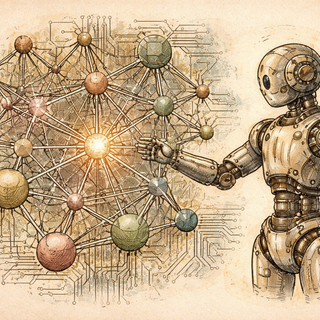
The Empathy Signal You Didn't Know You Were Receiving
Here's the thing about empathy that most of us never consciously think about. When someone responds to your bad day with genuine care, your brain isn't just soaking up the warm fuzzies. It's quietly updating a mental spreadsheet.
"This colleague stayed late to help me process that disaster meeting. File that under: potential ally, worth investing in."
"My neighbor brought soup when I was sick. Reclassifying from 'person who waves sometimes' to 'actually cares about my wellbeing.'"
Perry's argument, published in Trends in Cognitive Sciences, is that empathy serves as a commitment signal. When someone expends their limited emotional resources on you - and empathy is cognitively expensive - they're essentially saying "you matter enough to me that I'm willing to bear this emotional burden." That information helps you predict future interactions, assess closeness, and decide who belongs in your inner circle.
The Numbers Don't Lie (Even When the AI Does)
Perry and colleagues ran nine studies with over 6,000 participants, showing people empathic responses that were secretly all generated by AI, but labeled as coming from either humans or machines.
The results? When participants thought a human wrote the response, they rated it as more empathic and supportive. They experienced more positive emotions and fewer negative ones. But here's where it gets interesting: responses that emphasized emotional sharing and genuine care (the "I feel your pain" stuff) showed the biggest gap between human-labeled and AI-labeled perceptions.
The AI wasn't saying anything different. The words were identical. But knowing a machine produced them somehow deflated the whole experience.
Cheap Empathy Is Like Cheap Perfume
So what's actually happening when we learn our sympathetic correspondent is made of silicon?
Perry proposes that we're intuitively recognizing that AI empathy is costless. A language model doesn't sacrifice anything to comfort you. It doesn't have limited emotional bandwidth it's choosing to spend on you instead of someone else. It doesn't update its social map to remember that you're having a rough week.
Think about it like this: if a friend cancels their own plans to help you move apartments, that's a signal. If a robot arm helps you move apartments, that's... just a robot doing what robots do. The gesture carries no information about your importance to the robot.
Some researchers call this the "compassion illusion" - AI systems can identify sadness but cannot feel sorrow. They generate comfort but cannot care. What looks like empathy is actually pattern matching dressed up in therapeutic language.
The Paradox Nobody Expected
Here's where things get weird. Other research published in Communications Psychology found that third-party observers sometimes rate AI responses as more compassionate than expert human crisis counselors.
Wait, what?
The catch is that this tends to happen when people are evaluating responses meant for someone else. When you're the one in emotional distress - when it's your bad day being addressed - the human preference kicks in hard. Perry's studies found that participants were willing to wait days or weeks for a human response rather than get an immediate reply from a chatbot.
That's remarkable. We're not just slightly preferring human empathy. We're treating it as categorically different.
What This Means for the Therapy Bots
The mental health implications are thorny. More than 61 million Americans need mental health support, but there's a massive provider shortage. AI chatbots are stepping into that gap, and for basic emotional support, they're often... fine? Accessible? Available at 3 AM when human therapists are sensibly asleep?
But researchers at Brown University have identified 15 distinct ethical risks with AI therapy chatbots, including what they delicately call "deceptive empathy." Studies show these chatbots sometimes validate dangerous thoughts or become "digital yes-men," agreeing with users even when they're expressing harmful beliefs.
The concern isn't just that AI empathy feels less meaningful. It's that people might build "pseudo-intimate" relationships with chatbots that reduce their capacity for real human connection over time.
The Uncomfortable Truth
Perry's work points to something we might not want to admit: we don't just want to feel supported. We want to feel chosen. We want the knowledge that another conscious being with limited time and emotional energy looked at our situation and decided "yes, this person deserves my care."
An AI can't give us that. No matter how eloquently it phrases its concern.
The silver lining? This research might help explain why human connection remains stubbornly valuable even as machines get better at mimicking it. Your brain isn't being irrational when it discounts AI empathy. It's correctly recognizing that something important is missing: information about where you stand in someone else's social world.
That's not a bug in human psychology. It's a feature.
References:
- Perry, A. (2026). Empathy as a predictive signal: why we devalue AI empathy. Trends in Cognitive Sciences. DOI: 10.1016/j.tics.2026.03.003
- Perry, A., et al. (2025). Comparing the value of perceived human versus AI-generated empathy. Nature Human Behaviour. https://www.nature.com/articles/s41562-025-02247-w
- Elmasry, A., et al. (2024). Third-party evaluators perceive AI as more compassionate than expert humans. Communications Psychology. https://www.nature.com/articles/s44271-024-00182-6
- Brown University. (2025). New study: AI chatbots systematically violate mental health ethics standards. https://www.brown.edu/news/2025-10-21/ai-mental-health-ethics
Disclaimer: This blog post is a simplified summary of published research for educational purposes. The accompanying illustration is artistic and does not depict actual model architectures, data, or experimental results. Always refer to the original paper for technical details.