A missed heart diagnosis is not an abstract computer science problem. It is a parent who gets more winded every week and keeps blaming "bad sleep," a patient who learns too late that heart failure had been creeping in like a thief in gym socks, and families making life-changing decisions on a clock that does not care how elegant your algorithm looks in a slide deck. That is the emotional starting line for the 2025 ACC Braunwald Lecture review: cardiovascular medicine has more tools than ever, but the stakes are still brutally human [1].
Jessica Regan, Melissa Laitner, and Victor Dzau are basically telling cardiology to stop admiring the equipment and start training like it means it. Their review is a big-picture survey, not a single flashy AI stunt. It covers the whole workout plan: newer drugs for lipids, heart failure, and obesity; gene and RNA therapies; robotic and minimally invasive procedures; and, yes, the AI stack now barging into the clinic carrying a suspiciously large duffel bag of promises [1].
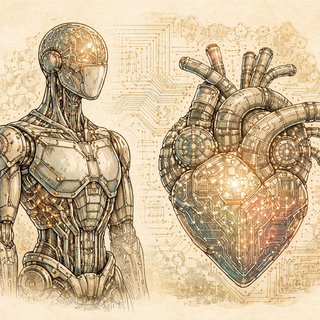
The Heart Clinic Is Doing Progressive Overload
The paper's main point is simple: cardiology is in one of those rare phases where multiple technologies are getting stronger at once. Think less "one miracle app" and more "the whole team hit a clean bulk."
On the biology side, therapies like PCSK9 inhibitors, SGLT2 inhibitors, GLP-1 receptor agonists, and newer gene-based platforms have expanded what doctors can actually do for patients, not just what they can worry about elegantly [1]. On the procedure side, catheter-based interventions, robotics, and better devices are making care less invasive and often more accessible.
Then AI shows up like the new trainer who actually tracks your reps. In cardiology, that means helping clinicians read ECGs, echocardiograms, CT scans, MRI studies, wearable data, and electronic records faster and more consistently. Digital medicine, broadly speaking, is about using those data streams to improve care rather than letting them sit around like expensive dumbbells in a hospital basement [7][8].
AI's Cardio Gains Are Real
This is not just "maybe someday" talk. A 2023 randomized, blinded Nature trial found AI-guided initial assessment of left ventricular ejection fraction in echocardiography was non-inferior to sonographer-guided assessment and saved time in workflow [4]. That is not a chatbot writing poetry. That is clinical grunt work getting done with fewer wasted reps.
In 2024, a Nature Medicine study trained AI to screen and diagnose 11 cardiovascular diseases from cardiac MRI data in 9,719 patients, with very high performance in internal and external validation sets [5]. In plain English: the machine helped turn one of cardiology's most information-rich but labor-heavy tests into something more scalable.
Recent reviews show this is expanding fast across imaging and population health. Cardiovascular imaging is now one of the clearest places where AI can spot patterns, automate measurements, and improve risk prediction [2]. Reviews in JACC, European Heart Journal, and Nature Reviews Cardiology argue that AI may help with prevention, opportunistic screening, imaging interpretation, and triage - assuming the models can survive contact with the real world, which is where many digital heroes discover they skipped leg day [3][6][9].
Why This Matters Outside the Hospital
Heart disease remains the top global killer, with the WHO estimating 17.9 million deaths per year worldwide [5]. So when cardiology gets better at finding disease earlier, reading scans faster, or matching treatment to the right patient, that is not just a nice bench PR for the field. That is fewer missed diagnoses, shorter delays, and potentially fewer people getting blindsided by a failing heart.
The Regan-Laitner-Dzau review also makes a bigger social point: better science alone does not win the championship [1]. If the best drugs are too expensive, if AI tools only work well in rich hospital systems, or if rural and under-resourced clinics cannot access the gear, then medicine has basically built a premium gym with no membership for the people who need it most.
The Part Where We Do Not Snort the Pre-Workout
Now for the cooldown. Health AI has a reproducibility problem, a bias problem, and an implementation problem. Some models look ripped in the training set and then immediately cramp in a new hospital with different scanners, different patient populations, or different workflows [8]. Recent work on safe implementation in cardiovascular imaging stresses model error, data drift, regulation, and human oversight as actual clinical concerns, not annoying paperwork between conference talks [10].
That is why this lecture review lands well. It does not act like AI is a wizard. It treats AI like a tool that needs coaching, supervision, and honest performance testing. Good. Medicine does not need more overtrained demos with zero match fitness.
The real takeaway is that cardiology is entering a brutal but exciting training cycle. Biology is getting sharper. Devices are getting smarter. AI is adding serious automation and pattern recognition. But if the field wants lasting gains, it needs form, discipline, and equitable access - not just more plates on the bar.
References
[1] Regan JA, Laitner MH, Dzau VJ. Cardiovascular Science, Medicine, and Society: The Brave New World: The ACC Braunwald Lecture 2025. Journal of the American College of Cardiology. 2026. DOI: https://doi.org/10.1016/j.jacc.2025.12.085
[2] Nakanishi R, Slomka PJ, Dey D, et al. Artificial intelligence in cardiovascular imaging: enhancing image analysis and risk stratification. BJR Open. 2023;5(1):20220021. DOI: https://doi.org/10.1259/bjro.20220021 PMCID: https://pmc.ncbi.nlm.nih.gov/articles/PMC10311632/
[3] Khoury M, Krittanawong C, Juraschek SP, et al. Artificial Intelligence in Cardiovascular Disease Prevention: Is it Ready for Prime Time? JACC. 2024. DOI: https://doi.org/10.1016/j.jacc.2024.03.401 PMCID: https://pmc.ncbi.nlm.nih.gov/articles/PMC11457745/
[4] He B, Kwan AC, Cho JH, et al. Blinded, randomized trial of sonographer versus AI cardiac function assessment. Nature. 2023;616:520-524. DOI: https://doi.org/10.1038/s41586-023-05947-3
[5] Wang YR, Yang K, Wen Y, et al. Screening and diagnosis of cardiovascular disease using artificial intelligence-enabled cardiac magnetic resonance imaging. Nature Medicine. 2024;30:1471-1480. DOI: https://doi.org/10.1038/s41591-024-02971-2
[6] Myhre PL, Grenne B, Asch FM, et al. Artificial intelligence-enhanced echocardiography in cardiovascular disease management. Nature Reviews Cardiology. 2026;23:164-182. DOI: https://doi.org/10.1038/s41569-025-01197-0
[7] Wikipedia contributors. Digital medicine. Wikipedia. https://en.wikipedia.org/wiki/Digital_medicine
[8] Wikipedia contributors. Artificial intelligence in healthcare. Wikipedia. https://en.wikipedia.org/wiki/Artificial_intelligence_in_healthcare
[9] Raisi-Estabragh Z, Salih A, Beier K, et al. Artificial intelligence to improve cardiovascular population health. European Heart Journal. 2025;46(20):1907-1916. DOI: https://doi.org/10.1093/eurheartj/ehaf125
[10] Howard JP, Zhang Q, Salih AM, et al. Artificial intelligence in cardiovascular imaging: risks, mitigations and the path to safe implementation. Heart. 2026;112(5):246-252. DOI: https://doi.org/10.1136/heartjnl-2024-324612
Disclaimer: This blog post is a simplified summary of published research for educational purposes. The accompanying illustration is artistic and does not depict actual model architectures, data, or experimental results. Always refer to the original paper for technical details.