Ant colonies solve complex routing problems without a single ant understanding the big picture. Each ant follows simple chemical rules, and somehow the colony finds the shortest path to food. INB3P, a new deep learning framework from Lv et al., does something eerily similar for drug delivery - it pieces together peptide sequences and 3D structures using local biochemical rules until, somehow, it figures out which molecules can sweet-talk their way past the blood-brain barrier.
The World's Pickiest Velvet Rope
The blood-brain barrier (BBB) is biology's most exclusive nightclub. Over 98% of small molecules get turned away at the door. Essentially ALL large biologics don't even bother showing up. This is great for keeping toxins out of your brain. It's terrible when you need to get medicine in.
Blood-brain barrier-penetrating peptides (BBBPPs) are molecular VIP passes - short protein fragments that can slip through. The catch: experimentally confirmed BBBPPs number in the low hundreds. Try training a deep learning model on a couple hundred examples. Go ahead. We'll wait.
This is the dataset equivalent of learning to cook from a recipe book that has three pages.
Physics-Informed Fakery (The Good Kind)
INB3P's first trick is a data augmentation strategy called Physicochemical-Guided Mutagenesis, or PCGM. Instead of randomly shuffling amino acids like a deck of cards (which produces biologically nonsensical sequences), PCGM mutates peptides while enforcing actual biochemical constraints. The mutations stay on the biological manifold - a fancy way of saying the fake data still looks like something nature could have made.
Previous approaches like Augur (Gu et al., 2024) used statistical oversampling methods like borderline-SMOTE, which work in feature space but don't respect molecular reality. PCGM operates directly on sequences with physics-based guardrails. The training set gets bigger without getting dumber.
Two Eyes Are Better Than One
The framework reads each peptide two ways simultaneously. The sequence goes through ESM-2, a protein language model trained on evolutionary data. The 3D structure (predicted by ESMFold) gets converted into a residue-level graph. Then a bi-directional co-attention mechanism aligns these two views - matching what the sequence "says" with what the structure "shows."
Think of it as reading a blueprint and walking through the building at the same time, cross-referencing as you go. If you're the type who likes visualizing how different data streams converge into a single decision, tools like mapb2.io can help map out these kinds of multi-modal architectures as interconnected reasoning chains.
Training happens in two stages. Stage one uses contrastive learning - pushing similar peptides together and dissimilar ones apart in the model's internal representation space. A recent comprehensive survey of contrastive learning in molecular science (Forooghi et al., 2026) confirms this approach consistently outperforms large pretrained models when data is scarce. Stage two fine-tunes the classifier with a custom loss function (Focal Loss + Stable-MCC) designed for imbalanced datasets. Because when your positive class has fewer members than a book club in a ghost town, standard cross-entropy loss just shrugs.
The Model Figured Out Biology Nobody Taught It
Here's where it gets genuinely interesting. INB3P autonomously rediscovered known biophysical mechanisms. It identified amphipathic motifs - regions where one side of the peptide is water-loving and the other is fat-loving - as critical for BBB penetration. It also flagged long-range contact stabilization patterns. These are established biophysical principles that researchers spent decades characterizing in wet labs.
The model wasn't told about any of this. It just... noticed.
This matters because "black box" is the default criticism of deep learning in drug discovery. ESM-BBB-Pred (Naseem et al., 2025) achieved solid accuracy with fine-tuned ESM-2, but interpretability wasn't the focus. INB3P's co-attention maps show why it makes each prediction, which is the difference between a model you use and a model you trust.
What This Actually Means
The BBB problem isn't just academic. Alzheimer's, Parkinson's, brain cancers - treatments exist but can't reach their target. Peptide-based delivery is approaching early human trials (Nature, 2025), and generative approaches like PepTune (Tang et al., 2025) are designing entirely new BBB-crossing peptides from scratch.
INB3P adds something these tools need: a reliable way to predict whether a peptide will actually cross, even when your training data fits on an index card. The team released a public web server and a standalone PCGM module, so anyone with a sparse biological dataset can borrow the augmentation strategy. That's unusually generous.
They trained a model on almost no data. It learned real biology. It explains its reasoning. For a field where most models are confident, wrong, and silent about both - that's not bad.
References:
- Lv, J., Wu, Q., Liu, J., et al. (2026). INB3P: A Multi-Modal and Interpretable Co-Attention Framework for Blood-Brain Barrier Penetrating Peptide Discovery. Advanced Science. DOI: 10.1002/advs.202523984
- Gu, Z.-F., Hao, Y.-D., et al. (2024). Prediction of blood-brain barrier penetrating peptides based on data augmentation with Augur. BMC Biology. DOI: 10.1186/s12915-024-01883-4
- Naseem, A., et al. (2025). ESM-BBB-Pred: a fine-tuned ESM 2.0 for identification of blood-brain barrier peptides. Briefings in Bioinformatics, 26(1). DOI: 10.1093/bib/bbaf066
- Forooghi, A., et al. (2026). A survey of contrastive learning methods in molecular representation. Briefings in Bioinformatics, 27(1). DOI: 10.1093/bib/bbaf731
- Tang, S., Zhang, Y., & Chatterjee, P. (2025). PepTune: De Novo Generation of Therapeutic Peptides with Multi-Objective-Guided Discrete Diffusion. arXiv: 2412.17780
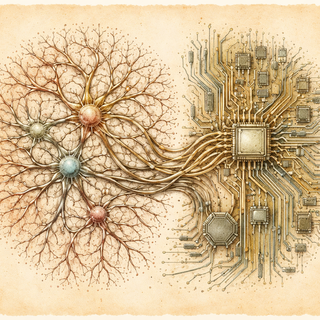
Disclaimer: This blog post is a simplified summary of published research for educational purposes. The accompanying illustration is artistic and does not depict actual model architectures, data, or experimental results. Always refer to the original paper for technical details.