Proteins are the molecular machines running every living thing on Earth. They fold into intricate 3D shapes, dock with other molecules, and catalyze reactions that keep cells alive. For decades, scientists trying to improve crops have been stuck tinkering with nature's existing protein catalog - swapping a gene here, tweaking an amino acid there. But what if you could just... design a protein from scratch? One that does exactly what you want, better than anything evolution stumbled upon?
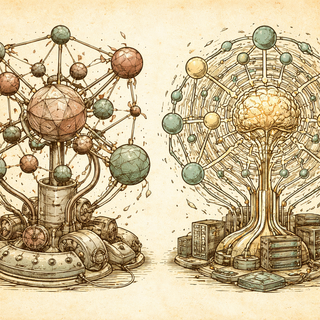
That's no longer science fiction. A new review in Molecular Plant lays out how artificial intelligence is turning protein engineering into something closer to architectural drafting than biological archaeology [1].
From Guesswork to Generative Models
The old approach to protein engineering was a bit like trying to improve a car engine by randomly swapping parts and hoping it runs better. Rational design improved things - if you understood the structure, you could make educated guesses. But proteins are finicky. Change one amino acid and the whole thing might misfold into useless spaghetti.
Then came the AI revolution. First, AlphaFold cracked the protein structure prediction problem in 2020, predicting 3D shapes from amino acid sequences with shocking accuracy [2]. But knowing what a protein looks like isn't the same as knowing how to build a better one.
Enter protein language models - essentially GPT for amino acids. These models, trained on millions of protein sequences, learned the grammar of how amino acids combine to create functional structures. ESM-2, ProtTrans, and similar models can now generate entirely new protein sequences that fold into stable, functional shapes [3]. The models didn't memorize proteins; they learned the underlying patterns. And that means they can extrapolate into sequence space that evolution never explored.
Eight Ways This Changes Plant Breeding
The review catalogs eight areas where AI-designed proteins could transform agriculture:
Disease resistance is the obvious one. Plants have immune receptors called NLRs that recognize pathogen proteins. But pathogens evolve fast, and resistance breaks down. AI can now design NLRs that recognize pathogen signatures the pathogen can't easily mutate away from. Think of it as designing a lock that works on multiple keys.
Insect resistance gets an upgrade too. Bt proteins have been the workhorse of insect-resistant crops for decades, but resistance is spreading. Generative models can design new insecticidal proteins with different binding properties - staying one step ahead of evolutionary arms races.
Stress tolerance improvements come from stabilizing key metabolic enzymes. Heat waves, drought, and salt stress all damage proteins. AI-designed variants can maintain activity under conditions that would denature natural versions.
Nutrient uptake gets more efficient through redesigned transporter proteins. Better nitrogen or phosphorus transporters mean crops need less fertilizer - good for both farmers and waterways.
CRISPR optimization is particularly clever. The Cas proteins used in genome editing weren't designed for plant cells. AI can redesign them for better efficiency, specificity, and reduced off-target effects in plant contexts [4].
Biosensors for detecting everything from soil nutrients to pathogen presence can be engineered as diagnostic tools. Imagine a plant that changes color when it needs water.
Synthetic regulatory circuits push toward programmable plants - biological systems that respond to specific inputs with defined outputs, useful for controlled environment agriculture where you want precise control over flowering, growth rate, or metabolite production.
The Reality Check Section
Before anyone starts designing tomatoes that taste like chocolate and cure cancer, let's talk limitations.
Domain shift is a big one. AI models trained mostly on bacterial and mammalian proteins don't always transfer well to plants. Plant proteins have their own quirks, and training data is comparatively sparse.
The genotype-to-phenotype gap remains stubborn. You can design a protein that looks perfect on paper, folds correctly in simulations, and expresses well in bacteria - then plant it in an actual crop and watch it do absolutely nothing useful. Living systems are complicated.
Validation bottlenecks slow everything down. Computational design is fast; growing plants and measuring traits takes months or years. The review proposes staged workflows that test increasingly complex systems, but there's no shortcut around biological timescales.
Generative model reliability varies wildly. These models can produce plausible-looking sequences that are biochemically nonsense. Filtering and validation remain essential, and the field is still developing robust quality metrics.
Where This Goes Next
The authors outline a roadmap from current capabilities (optimizing known proteins) through medium-term goals (de novo design of simple functional proteins) to the ambitious long game: synthetic protein networks that coordinate multiple traits simultaneously.
If you're into visualizing complex systems like protein networks or breeding pipelines, tools like mapb2.io can help organize and explore those interconnections - sometimes seeing the relationships between components makes the whole system click.
What makes this moment different from previous biotech hype cycles is the convergence of multiple capabilities: structure prediction, sequence generation, and high-throughput experimental validation are all improving simultaneously. The feedback loops are tightening.
Plants engineered with AI-designed proteins aren't replacing traditional breeding anytime soon. But they're expanding the toolbox dramatically. Evolution is a brilliant engineer, but it's slow and only optimizes for survival. AI doesn't care about survival - it optimizes for whatever you specify. That's either exciting or terrifying, depending on who's specifying.
References
-
Fu R, Jiang S, Wu T, Yin C, Yan J, Wang X. AI-driven protein engineering: A new paradigm for plant trait design. Molecular Plant. 2026. DOI: 10.1016/j.molp.2026.03.011. PMID: 41889171.
-
Jumper J, Evans R, Pritzel A, et al. Highly accurate protein structure prediction with AlphaFold. Nature. 2021;596(7873):583-589. DOI: 10.1038/s41586-021-03819-2.
-
Lin Z, Akin H, Rao R, et al. Evolutionary-scale prediction of atomic-level protein structure with a language model. Science. 2023;379(6637):1123-1130. DOI: 10.1126/science.ade2574.
-
Huang X, Yang D, Zhang J, et al. Engineered Cas12a variants for enhanced genome editing efficiency in plants. Nature Plants. 2024;10:892-903. DOI: 10.1038/s41477-024-01678-3.
Disclaimer: This blog post is a simplified summary of published research for educational purposes. The accompanying illustration is artistic and does not depict actual model architectures, data, or experimental results. Always refer to the original paper for technical details.