The neural network was embarrassed. Not because it got the answer wrong - it nailed 91.9% accuracy, thank you very much - but because it did it with so few neurons that its deep-learning cousins refused to sit with it at lunch. Welcome to the strange, wonderful world where a model inspired by a worm's brain analyzes your saliva to figure out if your gums and your blood sugar are secretly conspiring against you.
Wait, My Spit Knows Things?
Turns out, saliva is basically a gossip columnist for your entire body. It carries metabolic fingerprints - tiny chemical signatures that rat out what's happening inside you. Researchers at Peking University and Shimadzu Corporation just proved you can read those signatures with a mass spectrometer in about 42 seconds, feed the data into an absurdly small AI model, and accurately screen for a nasty clinical combo: periodontitis (severe gum disease) co-occurring with type 2 diabetes (Liu et al., 2026).
Here's why that combo matters. Diabetes and periodontitis aren't just two diseases that hang out together - they actively make each other worse. Diabetes cranks up inflammation, which trashes your gums. Trashed gums dump bacteria into your bloodstream, which messes with insulin signaling. It's a metabolic buddy cop movie where both cops are corrupt. And roughly 40% of dental patients under 45 with no diabetes diagnosis already show elevated blood sugar levels (Graves et al., 2026). That's a lot of people who don't know what's brewing.
Enter the Worm Brain
The AI model they used isn't your typical overstuffed neural network with millions of parameters chewing through GPU farms. It's a liquid neural network (LNN) - a architecture literally inspired by C. elegans, a 1-millimeter roundworm with exactly 302 neurons that still manages to find food, dodge predators, and live its best worm life.
MIT researchers Ramin Hasani and colleagues built LNNs to mimic how those 302 neurons work: instead of locking down weights after training like conventional networks, liquid networks keep their internal dynamics flowing (Hasani et al., 2021). Every new input doesn't just change the output - it reshapes how the network computes. Think of it like water adapting to whatever container you pour it into, except the container is mass spectrometry data from someone's mouth.
The practical upshot? The LNN in this study used roughly one-third the trainable parameters of comparable recurrent networks (BiLSTM, MHA-LSTM) while outperforming all of them. Conventional machine learning models like random forests and SVMs topped out at AUC 0.73-0.78. The LNN hit 91.9% accuracy and - this is the clutch stat - achieved 100% recall for the diabetes-plus-periodontitis group. It caught every single high-risk patient in the test set. Zero misses.
How They Actually Did It
The setup is cleverly simple. Researchers enrolled 426 participants across two clinical centers in China, divided into three groups: healthy controls (114), periodontitis only (209), and periodontitis with type 2 diabetes (103). They collected saliva samples and ran them through probe electrospray ionization mass spectrometry (PESI-MS) - a technique where a tiny needle picks up a saliva droplet and ionizes it directly. No fancy sample prep. No waiting around. Under a minute per patient.
The mass spectrometer spits out a spectrum - basically a chemical barcode of everything in that saliva sample. The researchers treated this spectrum as sequential data (ordered by mass-to-charge ratio), tossed in age and sex as covariates, and let the models learn. The deep learning models, which could exploit the sequential structure of the spectral data, absolutely crushed the conventional classifiers. And the LNN crushed the other deep learning models while being the lightest of the bunch.
Why This Is a Big Deal (and Why It's Not, Yet)
The dream here is obvious: you walk into a dental office, spit into a tube, and 42 seconds later an AI tells you whether you need to see both your dentist AND your endocrinologist. No blood draws. No fasting glucose tests. No waiting weeks for lab results.
But let's keep our feet on the ground. This is a proof-of-concept study with 426 participants across two centers. It needs external validation across diverse populations, different clinical settings, and larger sample sizes before anyone should base treatment decisions on it. The authors are upfront about this, which is refreshing.
What's genuinely exciting is the combination of technologies. PESI-MS has been around since 2012 (Mandal et al., 2012), and salivary metabolomics has been gaining traction as a diagnostic frontier (Tothova et al., 2024). But pairing rapid ambient mass spectrometry with a neural network small enough to run on edge hardware? That's a recipe for point-of-care diagnostics that could actually work in community health settings, not just well-funded research hospitals.
The liquid neural network architecture itself is having a moment. A 32-neuron liquid network recently hit 98.7% accuracy detecting atrial fibrillation at just 1 milliwatt of power. MIT spinoff Liquid AI raised $297 million to commercialize the technology. And the closed-form version of these networks (Hasani et al., 2022) trains 10x faster without losing accuracy. Tiny, efficient, interpretable models that punch way above their weight - right, that's the whole pitch.
Look, we're not going to diagnose diabetes from a spit test tomorrow. But the fact that a worm-inspired neural network can read the metabolic tea leaves in your saliva with near-perfect sensitivity for the highest-risk patients? That's the kind of weird, elegant science that actually moves the needle.
References
-
Liu, Y., Zhao, Y., Chen, Z., et al. (2026). Lightweight liquid neural networks decipher salivary metabolic fingerprinting for high-risk periodontitis screening in diabetes. npj Digital Medicine. DOI: 10.1038/s41746-026-02593-7
-
Hasani, R., Lechner, M., Amini, A., et al. (2021). Liquid Time-constant Networks. Proceedings of the AAAI Conference on Artificial Intelligence. arXiv: 2006.04439
-
Hasani, R., Lechner, M., Amini, A., et al. (2022). Closed-form continuous-time neural networks. Nature Machine Intelligence, 4, 992-1003. DOI: 10.1038/s42256-022-00556-7
-
Graves, D.T., Levine, M.A., Aldosary, S., & Demmer, R.T. (2026). Understanding the Periodontitis-Diabetes Linkage: Mechanisms and Evidence. Journal of Dental Research. DOI: 10.1177/00220345251388340
-
Tothova, L., et al. (2024). The role of salivary metabolomics in chronic periodontitis: bridging oral and systemic diseases. Metabolomics. DOI: 10.1007/s11306-024-02220-0
-
Mandal, M.K., et al. (2012). Application of probe electrospray ionization mass spectrometry (PESI-MS) to clinical diagnosis. Journal of the American Society for Mass Spectrometry. PMID: 22923015
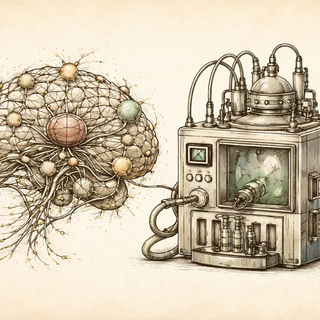
Disclaimer: This blog post is a simplified summary of published research for educational purposes. The accompanying illustration is artistic and does not depict actual model architectures, data, or experimental results. Always refer to the original paper for technical details.