Sixty minutes. That's how long it takes for your brain to reveal whether you're the type to bounce back from a stressful situation or spiral into a worry marathon. Not during the stress itself, not right after, but a full hour later - when you've already moved on with your day and forgotten why your heart was racing.
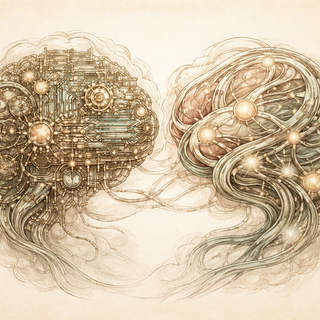
A team of Japanese researchers just caught this delayed neural switcheroo on camera. Well, on fMRI and EEG simultaneously, which is the neuroscience equivalent of filming with multiple IMAX cameras pointed at your skull.
The Waiting Game Nobody Knew About
Here's what threw everyone for a loop: Noriya Watanabe and colleagues at the National Institute for Physiological Sciences in Japan stressed out a bunch of volunteers (ethically, with standardized tasks) and then watched their brains for the next 90 minutes. The physical symptoms of stress - sweaty palms, racing heart - vanished pretty quickly. But deep in the brain, a much more interesting story was unfolding.
About an hour post-stress, two major brain networks started pulling in opposite directions depending on how psychologically resilient each person was.
Two Networks, Two Very Different Vibes
Your brain runs on competing committees. Two of the most important ones:
The Salience Network: Think of this as your internal security team. The anterior insula and dorsal anterior cingulate cortex are constantly scanning for threats, unexpected changes, and anything that needs immediate attention. It's the part of your brain that makes you jump at loud noises and obsess over that weird look your boss gave you.
The Default Mode Network: This is your brain's daydreaming department. Active when you're mind-wandering, reflecting on your life, thinking about the future, or processing who you are as a person. Less "red alert" and more "let me sit with this."
In resilient people, the default mode network ramped up activity one hour after stress, along with increased spontaneous firing in the posterior hippocampus - the brain region involved in contextualizing memories and stress regulation. It's as if their brains were saying, "Okay, threat processed, time to reflect and integrate this experience."
Less resilient folks? Their salience networks stayed cranked up like an alarm that never stops blaring. They also showed elevated high-beta and gamma oscillations - brainwave patterns associated with heightened anxiety and hypervigilance.
Machine Learning Plays Brain Detective
The researchers didn't just eyeball this. They threw machine learning at the problem to figure out which neural signatures predicted resilience best. The winner? Functional connectivity in the salience network at the one-hour mark. Default mode network connectivity came in second, followed by gamma power, high-beta power, and hippocampal activity.
Translation: if your brain's threat-detection system is still on high alert an hour after stress ends, that's a more reliable indicator of low resilience than anything happening during the stressful event itself.
Why This Timing Matters
Previous research assumed stress resilience was about how you react in the moment. This study suggests the real action happens later, during what the authors call a "nonconscious" neural recovery period. Your conscious mind has moved on, but your brain networks are still negotiating.
This creates a potential intervention window. If you could nudge the brain toward default mode activation during this critical hour - through mindfulness, brief therapeutic support, or even non-invasive brain stimulation - you might help shift someone from a stress-vulnerable trajectory to a resilient one.
The Bigger Picture
This research bridges a gap between animal studies and human psychology. Rats don't have existential crises about their career choices, but humans experience stress filtered through self-confidence, tenacity, and attitude. The neural networks involved - salience and default mode - are precisely the ones that handle these higher-order functions.
For anyone interested in mapping mental states visually, tools like mapb2.io let you create mind maps that could help you track stress triggers and recovery patterns over time - turning abstract brain science into something actionable.
What Does This Mean for You?
Next time you're stressed, don't judge your resilience by how you handle the moment. The real test comes an hour later. Are you still mentally replaying the situation, scanning for threats that aren't there? Or has your brain shifted into reflection mode, contextualizing what happened?
The good news: brain networks are plastic. The patterns you build through practice become the patterns your brain defaults to. Meditation practitioners show altered default mode and salience network connectivity, suggesting these networks respond to training.
Your brain's post-stress processing isn't destiny. It's a habit that can be changed.
References:
-
Watanabe, N., Yoshida, S., Keerativittayayut, R., & Takeda, M. (2025). Neural signatures of human psychological resilience driven by acute stress. Proceedings of the National Academy of Sciences, 122. DOI: 10.1073/pnas.2524075123
-
Menon, V. (2023). 20 years of the default mode network: A review and synthesis. Neuron, 111(16), 2443-2468. DOI: 10.1016/j.neuron.2023.04.023
-
Akiki, T. J., & Bhatt, S. (2022). Acute-stress-induced change in salience network coupling prospectively predicts post-trauma symptom development. Translational Psychiatry. PMCID: PMC8850556
-
Kim, Y., & Diamond, D. M. (2015). Stress effects on the hippocampus: a critical review. Learning & Memory, 22(9), 411-416. PMCID: PMC4561403
-
Kim, S., et al. (2022). State and Trait Anxiety Related Gamma Oscillations in Patients With Anxiety. Frontiers in Human Neuroscience. PMCID: PMC9233952
Disclaimer: This blog post is a simplified summary of published research for educational purposes. The accompanying illustration is artistic and does not depict actual model architectures, data, or experimental results. Always refer to the original paper for technical details.