The average American over 65 takes four or more prescription medications. Each new drug added to the mix introduces a combinatorial explosion of potential interactions. Two drugs? One possible interaction. Five drugs? Ten possible pairs. Ten drugs? Forty-five pairs to check. Twenty drugs? 190 pairs, and at that point your pharmacist is just praying to a reference database and hoping nothing got missed.
Deep learning models that predict drug-drug interactions directly from molecular structure are trying to take the prayer out of the equation.
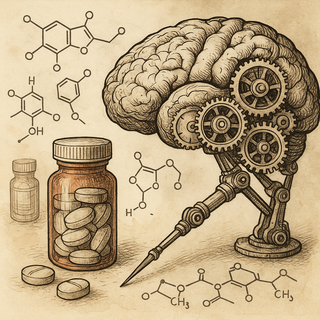
The Old Way Was Basically a Giant Lookup Table
Traditional drug interaction checking relies on databases - curated lists where human experts have cataloged known interactions based on clinical reports, pharmacokinetic studies, and post-market surveillance. Systems like Lexicomp and Micromedex are the backbone of every hospital pharmacy. They work. They've saved countless lives.
But they have a fundamental limitation: they can only warn you about interactions someone has already discovered, documented, and entered into the system. New drugs, rare combinations, and novel metabolic pathways slip through the cracks. The FDA's Adverse Event Reporting System (FAERS) is constantly flagging interactions that weren't in any database, sometimes years after both drugs hit the market.
Enter the Molecular Graph Neural Network
The new approach treats drug molecules as graphs - atoms are nodes, chemical bonds are edges - and feeds them into neural networks that learn to predict how two molecules will interact inside the human body. The model doesn't need someone to manually encode pharmacological rules. It figures out, from the structure alone, which molecular features tend to produce which types of interactions.
These models are trained on known interaction databases (so yes, they still depend on existing knowledge), but they can generalize to predict interactions for drug pairs that aren't in the training data. Some architectures use attention mechanisms to highlight which molecular substructures are driving the predicted interaction, giving pharmacologists something to interpret rather than a black-box "yes/no."
Why Molecular Structure Isn't Enough
Here's the thing that makes this problem genuinely hard: drug interactions don't just depend on molecular structure. They depend on dose, timing, the patient's genetics (especially CYP450 enzyme variants), kidney and liver function, what the patient ate for breakfast, and about forty other variables that a molecular graph can't capture.
A model that looks only at structure can tell you that Drug A is metabolized by CYP3A4 and Drug B inhibits CYP3A4, so there's likely an interaction. But it can't tell you whether the interaction matters clinically at therapeutic doses, or whether it's only relevant in patients with reduced liver function. That context still requires a human (or at least a much more sophisticated model that integrates patient-level data).
The Practical Promise
Where these models shine is in the drug development pipeline. Pharmaceutical companies evaluate thousands of candidate molecules, and knowing which ones are likely to interact with common medications before running expensive clinical trials is enormously valuable. Even a rough filter that says "this molecule's structural features suggest high CYP2D6 inhibition potential" can save millions of dollars and years of development time.
On the clinical side, the models could eventually serve as a second layer of checking - catching potential interactions that aren't yet in the standard databases, and flagging them for pharmacist review. Not replacing the pharmacist, but giving them a heads-up about combinations that look suspicious based on structural similarity to known interacting pairs.
Where It Goes From Here
The trajectory is toward multi-modal models that combine molecular structure with pharmacokinetic parameters, patient genetics, and real-world prescribing data. Some early work is already integrating electronic health record data to personalize interaction predictions. That's where the real value lies - not just "these two molecules might interact" but "these two molecules might interact in this specific patient."
For researchers mapping out the complex networks of drug interactions and metabolic pathways, visual tools help. mapb2.io offers mind mapping and visual diagramming tools that can help you sketch out those pharmacological relationship networks when the whiteboard runs out of space. - ## References
- General topic informed by computational pharmacology research. Related PubMed context: Arslan J, et al. Engineering framework for curiosity-driven and humble AI in clinical decision support. BMJ Health & Care Informatics. 2026. DOI: 10.1136/bmjhci-2025-101877 | PMID: 41871866
- Ryu JY, Kim HU, Lee SY. Deep learning improves prediction of drug-drug and drug-food interactions. PNAS. 2018. DOI: 10.1073/pnas.1803294115
- Zitnik M, Agrawal M, Leskovec J. Modeling polypharmacy side effects with graph convolutional networks. Bioinformatics. 2018. DOI: 10.1093/bioinformatics/bty294