Cancer treatment has roughly 200 FDA-approved biomarker-drug combinations, and that number keeps climbing like a startup's Series B pitch deck. No oncologist - no matter how caffeinated - can keep all of that in their head. So naturally, everyone's building AI to help. But here's where it gets spicy: the nerds in academia and the suits in industry are racing toward the same finish line with very different playbooks.
A new commentary in Cancer Cell by Justin Jee (Memorial Sloan Kettering) and Travis Zack (OpenEvidence) pulls back the curtain on this quiet turf war, and honestly, it reads like the setup to a buddy comedy where both leads think they're the main character.
The Academic Underdog With a Really Good Cheat Sheet
The piece spotlights work by Jun et al., who built a retrieval-augmented large language model (RAG-LLM) hooked up to something called the Molecular Oncology Almanac - or MOAlmanac, because oncology loves an acronym. Developed by the Van Allen Lab at Dana-Farber and the Broad Institute, MOAlmanac is basically a hand-curated encyclopedia of which molecular mutations respond to which therapies, organized by six tiers of evidence from "FDA literally approved this" down to "a computer model thinks maybe" (Reardon et al., Nature Cancer, 2021).
The clever bit: instead of letting the LLM freestyle its answers like a jazz musician who skipped rehearsal, the RAG approach forces it to look stuff up first. The model retrieves relevant entries from MOAlmanac before generating a response. Think of it as giving the AI an open-book exam instead of trusting its memory - which, as we'll see, is not its strong suit.
Jun et al. tested their system on both synthetic cases and real questions from practicing oncologists, and it accurately matched patients' genomic profiles to FDA-approved therapies (Jun et al., Cancer Cell, 2026). The hallucination problem? Largely tamed - at least within the boundaries of the curated database.
The Hallucination Problem Is Not Hypothetical
Why does this matter? Because when vanilla LLMs wing it in oncology, things get weird. An ASCO 2025 meta-analysis across 6,523 AI-generated oncology responses found a hallucination rate of 23%. Nearly one in four answers contained made-up information. GPT-4 was slightly better at 19%, but that still means roughly one in five responses about your cancer treatment could be confidently wrong.
A separate global survey found that 91.8% of clinicians had encountered medical hallucinations from AI, and 84.7% believed they could cause patient harm. Your AI copilot suggesting a nonexistent drug interaction isn't a quirky bug - it's a potential safety disaster.
Meanwhile, Industry Brought a Bazooka
Here's where Jee and Zack's commentary gets genuinely uncomfortable for the academic crowd. While researchers were carefully curating MOAlmanac one paper at a time, OpenEvidence (where Zack is CMO) has already locked in partnerships with NCCN, NEJM, JAMA, and AMA - and hit 760,000 registered physicians answering 18 million clinical queries a month. That's not a research prototype. That's infrastructure.
The industry playbook is straightforward: license the best clinical guidelines, wrap them in a slick interface, and scale to every hospital before academic tools finish their IRB paperwork. The commentary doesn't quite say "academia is getting lapped," but you can hear it between the lines.
Why Both Approaches Actually Need Each Other
The irony is that industry platforms and academic knowledge bases solve different halves of the same problem. Industry tools excel at distribution, user experience, and speed. Academic databases like MOAlmanac bring deep, expert-curated molecular knowledge that commercial licensing deals can't replicate - the kind of granular genotype-to-therapy mapping that comes from researchers who've spent years tracing the relationship between a specific BRAF V600E mutation and its therapeutic options.
RAG architectures bridge the two worlds by letting any LLM tap into curated academic knowledge at query time, without needing to retrain the whole model. If you've ever used a mind-mapping tool to untangle a complex decision tree (something mapb2.io handles nicely for visual thinkers), imagine that same branching logic applied to every molecular alteration and its approved therapies - that's essentially what MOAlmanac provides to the model.
The Real Question
Can academic tools compete with venture-backed platforms shipping to hundreds of thousands of doctors? Probably not on adoption speed. But the real risk isn't who wins the distribution race. It's what happens if the winning platform doesn't have rigorous, transparent, expert-curated knowledge underneath. Speed without accuracy in oncology isn't a feature. It's a liability.
The smartest outcome would be hybrid: industry's reach, academia's rigor, and RAG as the glue. Whether anyone's incentive structure actually supports that collaboration is a different question entirely (Jee & Zack, Cancer Cell, 2026).
References
-
Jee, J., & Zack, T. (2026). AI for cancer treatment information: Can academia stay in the game? Cancer Cell, 44(3), 460-462. DOI: 10.1016/j.ccell.2026.01.002
-
Jun, T., et al. (2026). A context-augmented large language model for accurate precision oncology medicine recommendations. Cancer Cell. DOI: 10.1016/j.ccell.2025.12.014
-
Reardon, B., et al. (2021). Integrating molecular profiles into clinical frameworks through the Molecular Oncology Almanac to prospectively guide precision oncology. Nature Cancer, 2, 1149-1160. DOI: 10.1038/s43018-021-00243-3
-
Subbiah, V., et al. (2025). Navigating AI accuracy: A meta-analysis of hallucination incidence in LLM responses to oncology questions. Journal of Clinical Oncology, 43(16_suppl), e13686. DOI: 10.1200/JCO.2025.43.16_suppl.e13686
-
Gao, Y., et al. (2024). Retrieval-augmented generation for large language models: A survey. arXiv preprint. arXiv: 2312.10997
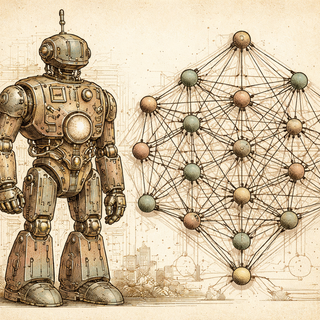
Disclaimer: This blog post is a simplified summary of published research for educational purposes. The accompanying illustration is artistic and does not depict actual model architectures, data, or experimental results. Always refer to the original paper for technical details.